Never Better Than Now.

I remember when my dad turned 40. They threw a big birthday party, and friends gifted him this giant inflatable cane. Everyone at the party signed it. It sat in his office for a long time, and I every time I visited dad at work, I remember reading the inscriptions and names on the cane. There were a lot of jokes about my dad officially reaching old age, and I couldn’t disagree.

To a kid, 40 felt like 100.

But I’m 38 now, and looking up at 40 feels strange. I certainly don’t feel 100; I feel a lot closer to the starting line than the finish.

I also know that I don’t know when the finish line arrives.

I’m trying to remind myself that there’s never a right time to do the big stuff. Sometimes I try to tell myself that the timing will be better just a few months down the road, even though I know that’s not true. If you want to do something, you should do it now. Next year, next month, next week — none of this is guaranteed.

There’s never been a better time than right now.

———

I took that photo alongside the harbor in Copenhagen one morning a few weeks ago. I was sitting there, watching the sun rise on a beautiful morning, and thinking about the fact that I do something that lets me travel to such beautiful places and work with such interesting people. I know how lucky I am.

Three Tips for Networking at Conferences.

It’s funny to imagine now, since I’m often the guy who’s on stage, but it wasn’t all that long ago that I hated going to conferences. Meeting lots of new people? Lots of small talk? Breakfast in a hotel conference room? No, thanks!

But I have learned a few things about conferences along the way. Here are three that have made conferences about 1000x better for me.

1.) Literally always introduce yourself, even if it’s someone you’ve met a few times before, and even if you’re wearing a name tag. At these conferences, you meet so many people — half the time, I can barely remember my own name by the end! Introduce yourself and you’ll avoid that awkward moment in the conversation when you realize that the other person is making the “Where do I know this person from?” face.

2.) Have an icebreaker question ready for everyone. I was just talking with one of my public media clients about this — they’re going to a conference soon with lots of other small public media outlets. They could start each conversation with, “So where do you work?” or “How do you like living in Springfield?”, but honestly, how many great conversations have started with a question like that? Instead, they’re going in with a different icebreaker: “What’s the most successful fundraising drive you’ve done recently, and why do you think it worked so well?” If they ask a dozen people that, they’ll start a dozen interesting conversations — and probably walk away with at least 2-3 ideas they can try out for themselves!

3.) Always be the person who says hi to the speaker afterwards. Stop by, say thank you, and ask your one extra question. These speakers usually traveled a ways to be there — they’re happy to talk! (They just spent 45 minutes talking about that topic anyway!) Maybe you’re looking for an example or an idea. Ask them, and more often than not, they’ll be happy to send you one after the event is over. Just this morning, I got an email from someone I met after a session I hosted last week. I was delighted they actually followed up — more often than not, people don’t!

———

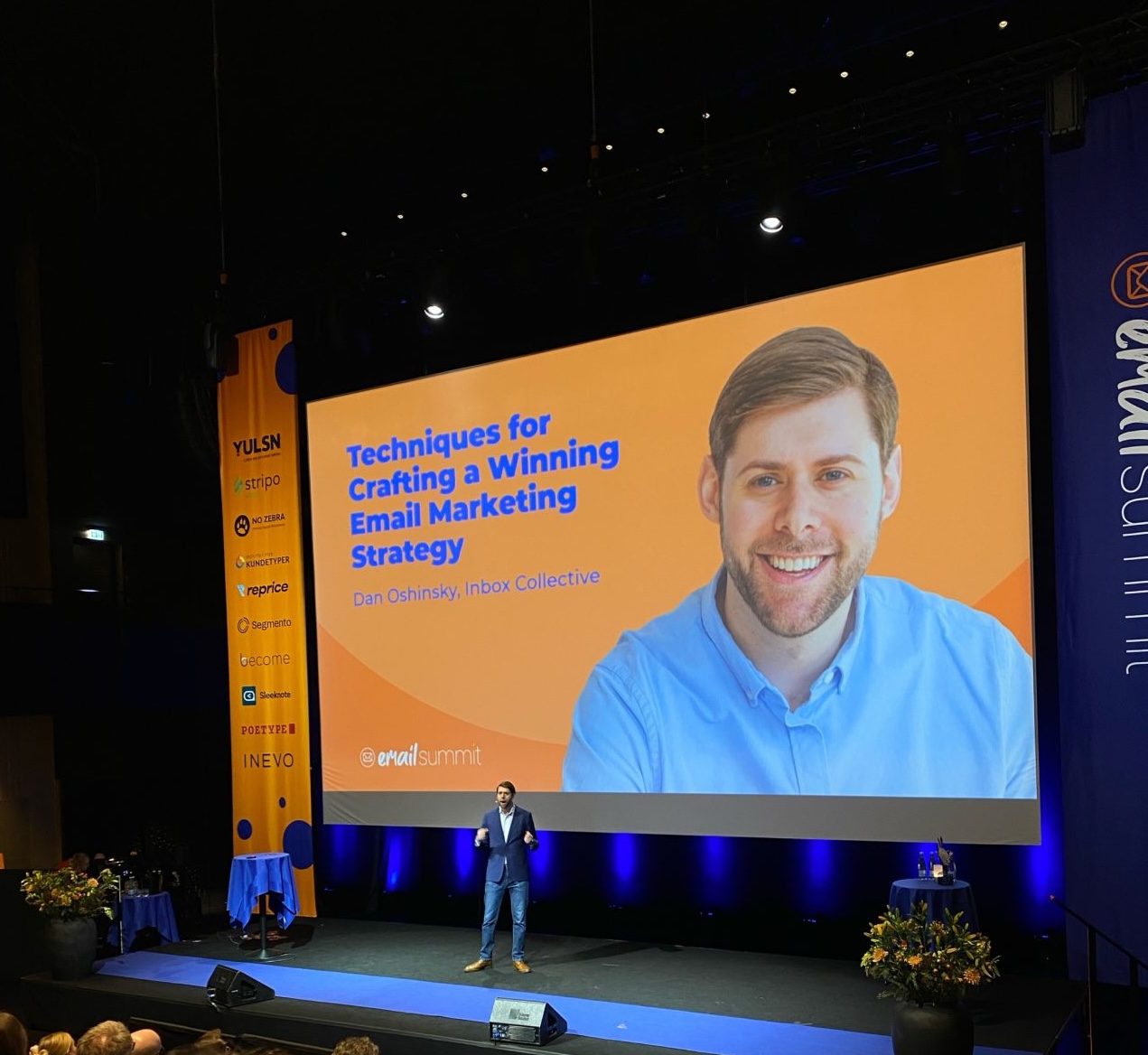
That’s me on stage at Email Summit DK in Odense, Denmark, in January. It’s still funny to me that a guy who didn’t love conferences now speaks on stage at them.

Roll With It.

It’s Wednesday morning, about 7:20 a.m. Central time. I’m in row 13 of a flight from Chicago back home to Salt Lake City. I don’t love flying that early in the morning, but I’ve got calls later that morning and then a kiddo to pick up in the afternoon. The early flight makes the most sense. I’ve checked the stats, too — in the past 60 days, this flight’s been early or on time nearly 90% of the time. We’re all set for an on-time departure, and my flight tracker app says we’ll arrive 20 minutes early, with plenty of time to make it home for the first call.

Which is exactly what does not happen.

There’s a plane stuck behind us at O’Hare, and it doesn’t move for about 40 minutes. Instead of an on-time departure, we end up with a very-not-on-time departure. I land in Salt Lake with just enough time to know that I won’t have enough time to make it home for the calls.

There would’ve been a moment when this would’ve really upset me and probably screwed up my day. But I’ve been through stuff like this before.

So I find a gate where the plane is just about to depart — it’ll be empty for an hour or two — and set up there. I take my calls. I apologize to my clients for talking to them from an unusual spot. No one really seems to mind. When the calls are over, I get a Lyft to take me home.

Things happen. It’s up to you to roll with the changes.

———

I took that selfie at the gate just before my flight. Was I tired? Sure. Would I have been happier taking the call at home? Absolutely. But things happen.

A Trick for Prioritization.

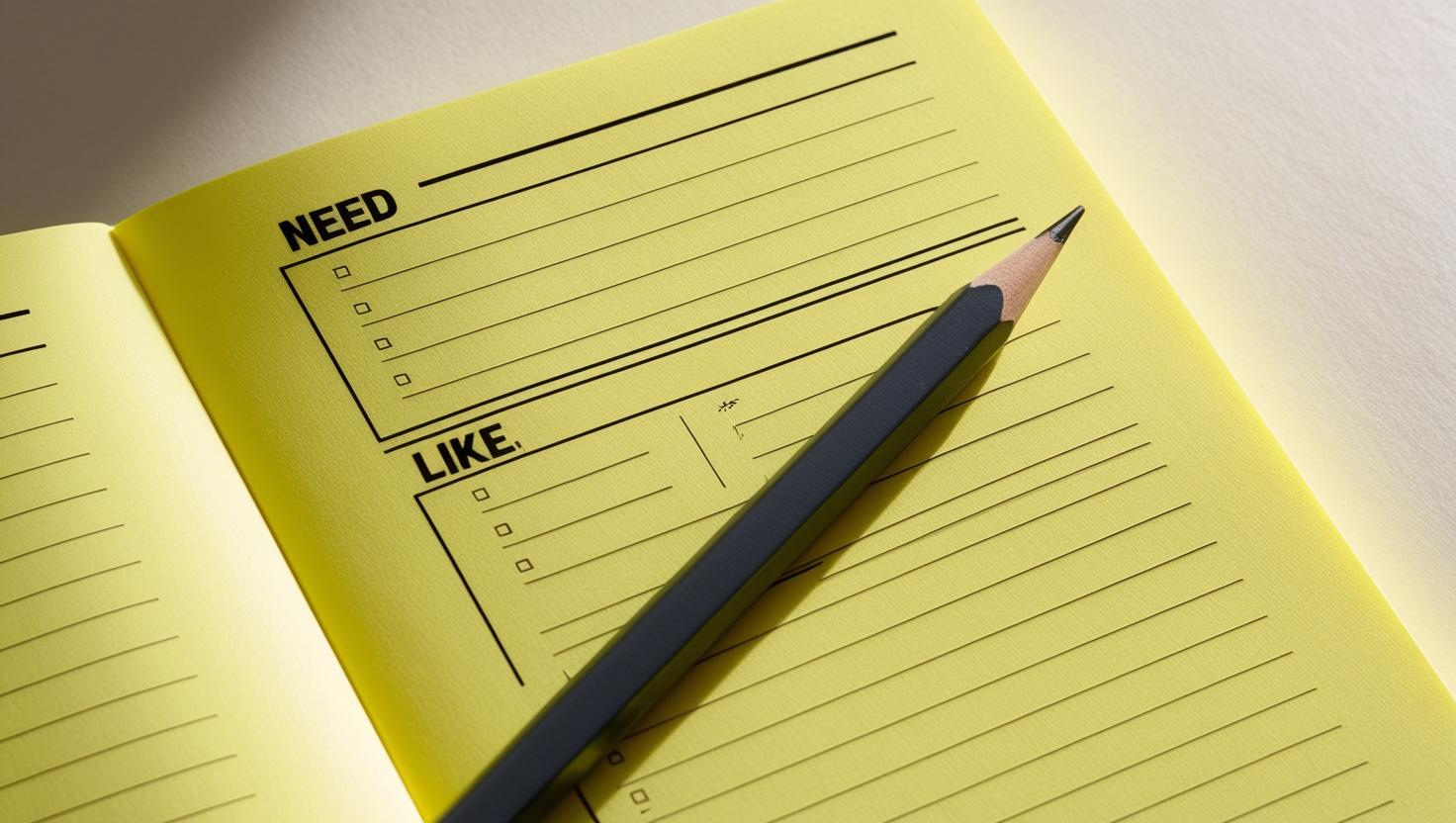
a yellow legal bad with sections for NEED and LIKE written out.

Here’s little trick I like to use when I’ve got way too many tasks on my to-do list and can’t figure out what to prioritize.

Open up a spreadsheet and type out all the tasks you’ve got on your list. Then create three columns, and put these headers at the top:

• What you NEED to do this quarter
• What you WANT to do this quarter
• What you’d LIKE to do this quarter

NEED is the stuff that 100% absolutely must get done.

WANT is the next bucket of tasks you’re most excited about.

LIKE are things you’re interested in… but you can’t quite make a priority.

I know I’m guilty of focusing on stuff that isn’t in those “Need” or “Want” buckets. Sometimes, just seeing everything laid out like this helps me refocus on what’s most important.

———

That’s a sketch that Canva’s AI tool created for me. It’s a decent example of what this exercise might look like if you did it on a yellow legal pad.

Don’t Overthink This.

a brown chair, a white table, a simple fern, up against a white wall.

90% of my advice to clients is boils down to three words:

“Don’t overthink this.”

People get into their heads when it comes to tweaking their strategy or tactics. They get caught up thinking that there are a series of three-dimensional chess moves that will fix what’s wrong.

But usually, the fixes are simpler than that: Your positioning is unclear. You’re not targeting the right audience. You’re doing too many things at once.

My job is often to tell teams: You’re overthinking things! Let’s simplify and get back to the core of what you do well.

———

That’s not the fanciest desk set up in the world, but it’d work just fine? Why? It’s so darn simple. Thanks to Unsplash for the photo.

You Ain’t Hamlet.

This interview with Jason Alexander, of “Seinfeld” fame, popped up in my feed the other day, and I think it’s worth watching in full. In it, he says:

I went to Boston University as a theater major, and because William Shatner was my muse, I wanted a dramatic career. I really thought I was going to play some of the great classical roles and be a dramatic actor. Sure, I hadn’t done much comedy. I’d done some musicals, so there was that, but I hadn’t done much comedy. And the summer second semester of my sophomore year, I had a professor named James Spruill at Boston. He was the only black member of the faculty. He was a guy who had come up in the ‘60s with street theater — theater is to change the minds of the masses, affect change. He brought me into his office for my my semester consultation, and he had this great basso kind of James Earl Jones voice, and he sat back, and he just kind of nodded his head and looked at me for a minute. He went, “I know that your heart and soul is Hamlet, and you would be a profound Hamlet. You will never play Hamlet, so you best get good at Falstaff.”

And he basically said, look, look in the mirror. You are 5’6’’. You are 20 to 25 pounds overweight, and you are losing your hair. You have a large performing persona. If you want a a commercially successful career, you’re going to be a comedian, and you’re not embracing it, you’re not looking at it, you’re not doing it.

Had he not said to me, “You ain’t Hamlet, man,” I would have finished that school and gone into the professional world thinking, ”Here’s Jason Alexander and the Iceman cometh. It’s what everybody is waiting for.”

And I would have been wrong.

It’s such a wonderful reminder: We all need someone in our lives who’ll be truly honest with us. Sometimes, we need that person to lift us up. Sometimes, we need them to keep on the right path. But all we need those voices we can trust, and if you find someone who can do that, you owe it to yourself to listen to them. They’ve got something worth hearing, even if it’s not what you want to hear at that moment.
Look Up.

I bought this piece of art today at the Farmer’s Market downtown. It’s a big piece of wood, probably about five feet long, and on it is a carving of the mountains here in Utah. This week, I’ll hang it behind my desk.

But the memorable thing for me wasn’t the purchase of the art — it was walking it to the car.

Now, you’d think that a guy my height (I’m about 6’4’’) carrying a five-foot-long piece of wood might get noticed while walking down the street. I’m hard to miss! And yet: In that short walk, I cannot tell you how many people nearly walked directly into me.

Look, I’m as guilty as any of being distracted by my phone. But today was a nice reminder: The stuff directly in front of you might be pretty important. (Walking into me or that piece of art would’ve been a less-than-fun experience for someone.) It’s easy to miss things happening in our world, but we shouldn’t be missing the obvious stuff that’s literally right in front of our faces.

So look up every once in a while — hopefully to pay attention to what’s happening in your world, but at the very least, because you might be about to walk into a tall guy carrying a big piece of art.

———

I don’t have a photo of the art, but here’s a photo that Olivia Hutcherson took for Unsplash of downtown Park City in 2018 at the Farmer’s Market, with small white booths lining the street and red flowers in the foreground.

What More Do I Really Need?

There are days when I look at what I’m doing and wonder: Shouldn’t I be doing more?

Sure, I’ve grown my email list from 0 to 10,000 subscribers — but couldn’t I have more subscribers?

Sure, I’ve built a successful consulting business — but couldn’t I bringing in more revenue?

Sure, I’ve created a profitable website — but couldn’t it get more readers?

Couldn’t I sell courses? Couldn’t I write a book? Couldn’t I give more talks? Couldn’t I charge more for each speaking engagement?

And then I have to take a few steps back to acknowledge what I’ve actually done.

I’ve built an audience, I’ve built a business. I’ve created, from nothing, the best paying and most flexible job I’ve ever had. I’ll take more time off this year than I’ve taken since college. I’m in a position where I get to pick and choose what projects I take on and who I work with.

I’m proud of the success I’ve had. Success should be enough — do I need to be excessively successful? Do I really need to do more?

I know the answer to those questions, but it’s hard to quiet the voice that wants to do more. I have to remind myself: I don’t need to do everything. This is more than enough.

———

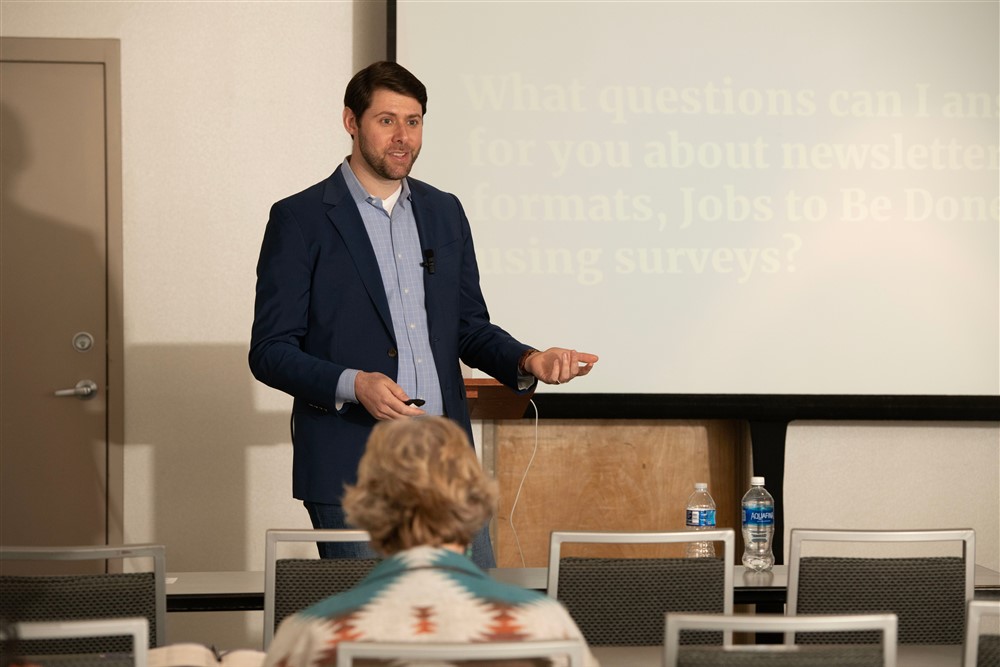
That’s from a talk I gave in Denver in September. It went well — but yes, I still do wonder if I could’ve done better for those who attended.

It Goes So Fast.

Busy freeway traffic at night.

I’ve been listening to Mary Louise Kelly’s book, “It. Goes. So. Fast”, while taking my newborn son on walks around my neighborhood. It’s a book about a parent’s journey during her son’s senior year of high school, which makes for quite the contrast from my day-to-day. It’s tough to imagine my son graduating from high school — something that should happen in the year 2041! — but I know the years will go by fast.

It’s certainly been my experience so far. To be a parent to a newborn is to live on a schedule completely untethered from normal time. There are no clocks on newborn time; we operate hour to hour. There have been a lot of 4 a.m. feedings, and a lot of late nights. Time isn’t something we obey anymore — it just kind of happens while you’re busy with the baby.

But to operate on newborn time is to also live in the moment, as much as you can. The baby will never be this small again. They’ll never smell the way a newborn smells, or smile the way a newborn smiles. There is no going back; there are no do-overs.

And it’s an amazing reminder: Be present. Pay attention. Celebrate the moment.

It will be gone soon, and fast.

———

That image of cars blurring past on the highway comes via Jake Givens and Unsplash.

Learn From Others — But Find Your Own Way, Too.

That's a photo of someone writing down ideas on Post-It notes (and crumpling up the bad ideas)

We live in an age of copycats. When someone has success in a particular way, there’s a rush for others to copy that model.

There’s nothing wrong with learning from others. There’s no reason to make the same mistakes that others have already made. Ask good questions, listen, and learn from others. Use existing examples to make the work you do better.

But you have to find your own way, too. You have to find ways to take what you’re doing and put your own spin on it.

Only you can do what you can do. So don’t be content to copy and paste — learn from others, and find a way to make things your own.

———

That image comes via Kelly Sikkema and Unsplash.