How To Keep Going When Things Go Wrong: Lessons From a Dispatch Concert.

I went to see Dispatch last week in D.C. They’re a band with a fascinating backstory. They’re a New England-based jam band with a Dave Mathews meets Phish meets Paul Simon kind of vibe. In the late 90s, they got big despite releasing their music without a major label. Then, right as they were starting to go mainstream, they broke up.

But last year, they reunited, and this year, they released their first full-length album in a decade.

Live, they’re fantastic. I’ve seen them a handful of times, and I’d put their show up against any. The show is a ton of fun to go to. The crowd jumps up and down, everyone’s singing along — it’s just a really good time.

But last week in D.C., tons of stuff went wrong at the show. The sound went out during their third song, and again during the fourth. Some guitar strings broke. The band had a few false starts on songs.

But the funniest came about halfway through the set. You know it’s not your night when something like this happens:

Chad Urmston, lead singer of Dispatch: “We’d like to call out some friends to join us on this next song.”

[Stage manager runs out and whispers something in Chad’s ear]

Chad: “Uh, apparently our friends are already driving to Atlanta for tomorrow night’s gig.”

So did the band panic? Did they freak out?

Hell no! They called up four strangers to sing backup vocals on the song instead.

Seriously. They grabbed four random people from the crowd, briefly taught them the chorus, and then started playing.

There’s the Malcolm Gladwell idea that you need to hit 10,000 hours to master any skill. But with a band, you need even more than that.

It’s not just your instruments that you need to master. You also need to learn how to play live — because lots of things can go wrong live. A band like Dispatch has spent so many hours on stage that they’ve mastered how to keep doing work even when everything’s going wrong.

Most people want to plan for the road ahead, but you can’t really plan for most of what’s about to hit you. All you can do is have the confidence to get through bad situations.

You have to stay calm and keep putting one foot in front of the other when it hits.

Dispatch did it last week, and they pulled off a hell of a show — even with all the technical difficulties.

Bravo, boys. One day, may the rest of us learn how to keep going when things go wrong.

The Three Things That Separate Those Who Do From Everyone Else.

“Ignore the money and the news. Find good people who make wonderful things, and help them do it.” — Erin Kissane

About once a month, I get an email from someone I don’t know. The email reads as follows:

Hi, Dan.

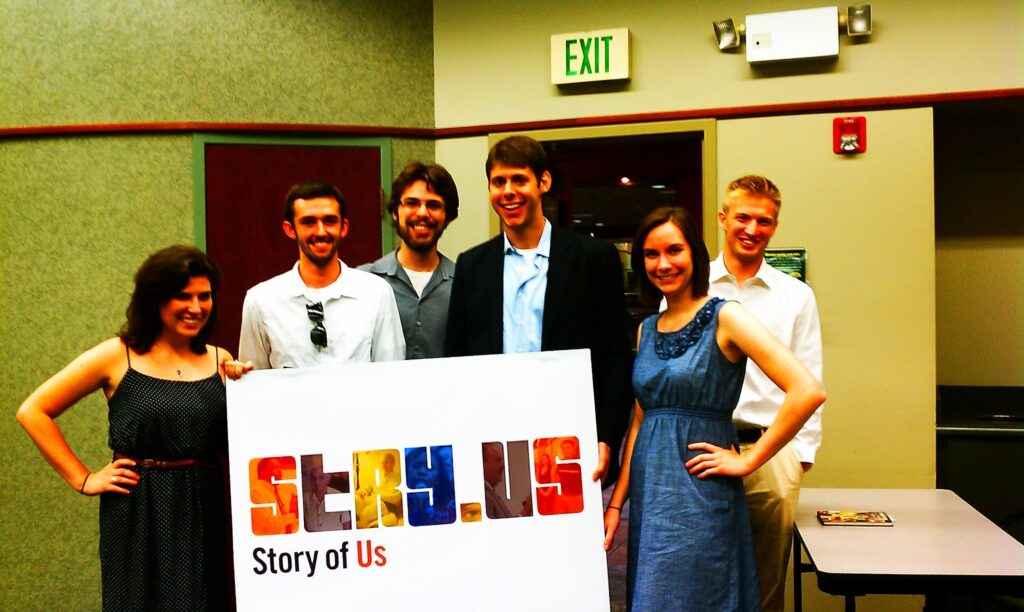
I’m a huge fan of Stry.us. I’m thinking of starting my own news site devoted to long-form journalism. I was hoping I could talk with you about how to get started.

I have gotten a lot of these emails, and I’ve followed up with almost all of them. Of the people who’ve emailed me, a small number have actually gone on and done something. A much larger number shoot me a couple of emails or maybe spend 20 minutes on the phone with me before deciding not to take on their dream.

This is what I’ve learned from the conversations with all of these people. The lessons here are from the journalism world, but they’re pretty universal themes, I’ve found.

1. People Rarely Follow Their Effort — People tend to think about their own passion first. They’re told that if they care about something, they should focus on that.

But I’m a believer in what Mark Cuban once said:

“Don’t follow your passions, follow your effort. It will lead you to your passions and to success, however you define it.”

Everyone I’ve talked to about starting a long-form project has been incredibly passionate. But only a handful have actually gone through with it.

Why? Because not everyone is willing to put in the time and deal with the pain that comes with starting something great.

I know this: Just proving that you’re willing to do the work is a differentiator in this world.

2. Having a Team Matters — The people who’ve gone forward with these projects always have a team/tribe behind them. Even if it’s just a few readers who are really excited about the project. Even if it’s just a few people who want to copy edit stories.

The people who go forward have always found other people who buy into the dream, too. It’s much easier to quit when it’s just you.

3. Experience Only Takes You So Far — Some of the people I’ve talked to have had lots of experience in the news world. Some have had very little.

But when you’re trying to start something big, experience is only a small part of the equation. I’ve said it before: You also need time to make it happen, and a great team behind you, and a lot of hustle.

The people who say they can’t do something because they don’t have enough experience are usually just making excuses for themselves.

If you want to start something, then do it. But please, remember: Anyone can start something. What counts is that you follow through. That you hustle. That you do the work.

There are people in this world who talk, and there are people in this world who do.

Be the latter. We need more of them.

That inspiration at top comes via @coffeeeater.

This Post Is For People Who Publish Content on the Internet.

Please pardon the brief pause today from your regularly-scheduled work-related post. Today’s blog is about some smart thoughts I heard at a conference last week.

Wise words about work will be back on Monday.

-Dan

Digital East 2012: The 10 Best Things I Learned.

I attended Digital East 2012 last week, a conference in the DC area with big lessons and ideas for those of us who make stuff on the web. Here are some of my favorite lessons and tidbits from the conference:

Storified by Dan Oshinsky · Mon, Oct 08 2012 15:46:56

1. This Is Excellent Advice — Two speakers really got me excited at Digital East: Alexandre Douzet of The Ladders, and Anthony Melchiorri of “Hotel Impossible.”

Douzet talked about finishing his first Ironman. In his own words:

"Pain is inevitable, suffering is optional"- Alex Douzet/Ladders at #deast12 @DigitalEast http://pic.twitter.com/eWcsHF0rJustin Berk
"If aim low, you will land low." via @adouzet #deast12Amir Zonozi
Melchiorri talked about the importance of focusing on your business first. What is it you really do?
Take care of the customer. Don’t worry about how you look online. @anthonyhotels #deast12Vicky Dobbin
key takeaway from @AnthonyHotels keynote: "If your life sucks. You suck. Your business sucks… You suck." #wordstoliveby #DEast12Caitlin Romig

2. We Need To Learn How To Measure Social Media. — Because here’s the simple truth:

A fan is not a business metric #DEast12 #stage1 @MergeRJ
This, too:
"Unicorn farts and magic dust and all of a sudden people are going to share it" ~ misconception of how social content goes viral #DEast12Amanda Klein
What’s the metric you’re actually using to track social? Total shares? Clicks? Likes? Whatever it is, the sooner you settle on it, the better:
Find the "guiding star" that leads your metrics, then track your progress. #DEast12Ifdy Perez
Brands need to 1- move past the fear of negative feedback online and 2- define what ROI means to them — no more mushy metrics! #deast12Joe Gizzi

3. Social Starts With a Big Ask — Too often, we fail to actually engage our fans and followers. So, what’s the solution?

How can you invite/make it easy for people to be part of your brand story? #deast12 Alison
If you want people to engage, give them a task. It makes them feel like part of the community @orihoffer @METRO #DEast12RJ
"@districtjoe: Social Loyalty is about Action + Reward." #DEast12AK Stout
That’s what we’re really working towards: loyalty and trust.

4. YouTube video: Okay. Streaming Video: Better. — Online video is an excellent tool, but streaming video might be an even better one. Here’s a stat that shocked me:

20% of online video views click away from a video in the first 10 seconds or less #DEast12Justin Ihara
But here’s the same metric for streaming video:
#deast12 live video watchers are engaged. Watch 12-14 mins compared to 2-3 mins on YouTube or Vimeo.Casey Higgins
Streaming video has a few other benefits for brands:
#1 reason to stream live media: to amplify a brand event #DEast12 #stage2 @MergeRJ
"@SamKimball: You can’t replace IRL networking but live streaming events leads to a huge opp to deliver to more people." #DEast12AK Stout
RT @jccjhiggins: #deast12 Why not live stream events? Can embed into an FB app or tweet the link on Twitter and it plays within the feed.Jay S Daughtry M.Ed.

5. Rethink Content — This seemed like a simple — but under-appreciated — lesson from the BuzzFeed guys:

Alex Weidlin, BuzzFeed: Content is a gift and you want to share good content with your friends. Yes, yes, and yes. #DEast12Ken ReCorr
The point: People love sharing stories that are relevant, timely and — oh yes — make themselves look cool/clever/awesome.

6. We’re Going Visual — More and more, we’re pushing content that’s visual.

(The speakers didn’t talk about the importance of great design on the web, but I think that’s absolutely worth talking about here, too. Great stories deserve to be presented beautifully.)

“@R2integrated: "90% of info transmitted to the brain is visual" youtube and pinterest are platforms leveraging this statistic #DEast12”AK Stout
@nickschaper says our news feeds are turning into slide shows and wonders how long b4 we stop seeing letters. #DEast12AK Stout

7. Your Fans Aren’t Seeing Your Facebook Posts — Here are two numbers that should scare anyone with a Facebook page:

Brand pages reach 16% of fans each week on average and this will keep shrinking #DEast12Christie Michalec
"@districtjoe: You have 3-6 chances (posts) to get your fans to engage with you before you become algorithmically irrelevant." #DEast12AK Stout
You read that right: If you’re not generating likes/shares/comments with fans in the first handful of posts, Facebook will just stop showing your content to fans. And here’s why that’s especially bad news:
65% of consumer engagement across Facebook is on timeline; 29% in newsfeed, 6% in ticker #deast12Michael Murray
But there’s hope for you on Facebook:
Posts containing imagery/video generate 100-180% more engagement per post on Facebook. #DEast12James Wong
@Fracked says the MOST engaging Facebook posts have under 40 characters text or less with a cool picture #deast12Lauren Ashley Wolfe

8. There’s a Lot We’re Not Tapping Into On Facebook — Three things that we should be talking about: the possibilities of Open Graph (more details here); using complementary colors; and the role of sponsored stories.

"@extoleinc: With the FB Open Graph we move beyond the ‘Like’. Now recommend, bought, claimed, loved, synced, etc…" #DEast12AK Stout
"@Fracked: Orange is a complimentary color to FB’s blue. The brain likes complimentary colors." Need to go find some orange pics. #DEast12AK Stout
"@extoleinc: Sponsored stories are more effective than Facebook ads bc friends endorse brands and provide social context." #DEast12AK Stout

9. SEO Still Matters — Google continues to be a huge driver of traffic to many sites. And the single most important SEO strategy is still this: Create good content. (Yes, it’s that simple, sometimes.) 

Preach! SEO is not just something you tack on at the end of the publishing flow. #deast12Heather Kuldell
Forget CTR. When comes to ads measure interaction rate and interaction time. Better measure of brand awareness. #deast12 Alison
(CTR = Click through rate.)
"@SimonHeseltine: Even no follow links have an impact because Google & other SE’s look at social relevance." #DEast12AK Stout
(The short version here: Google doesn’t place a ton of importance on social, but it has a small role. So make sure people are sharing your content.)

10. Your Email Needs to be Mobile-Friendly — This is something I acted upon the day after the conference, actually. Your email newsletter needs to work on mobile devices. (Mine didn’t, I discovered.)

"@cameronbrain: 30%-40% of email newsletter opens occur on mobile devices." #emailmarketing #DEast12AK Stout
Make your emails mobile-friendly! Approx 70% of ppl who’ll open your email on their phone will delete it w/o reading – @mheinsler #deast12Razoo.com

Perspective Matters.

“When you look at the Moon, you think, ‘I’m really small. What are my problems?’ It sets things into perspective. We should all look at the Moon a bit more often.” — Alain de Botton

 
When I lived in Springfield, MO, I occasionally had to fly other places for work. Getting flights out of the Ozarks isn’t always easy, and it’s rarely cheap.

So twice this summer, I flew instead out of St. Louis. That airport is 227 miles away from where I lived in Springfield.

I am writing this blog post while riding a bus from New York to DC, and I am shocked at how fast this drive is going. I seem to remember it taking longer.

But now I’m checking the length of the trip on Google. The total distance? 225 miles.

So here’s a thought: In Missouri, I’d drive all that way to get on a plane. But if I decided to book a flight out of NYC — and I drove from DC to fly out — I’d be considered crazy. Why is that?

We all like to think of ourselves as creatures with steadfast principles, but the truth is, we’re constantly making decisions based on place, time and circumstance. Perspective matters.

In Missouri, when booking flights, price mattered most to me. In DC, I’ve got plenty of cheap options, so I shift to a new priority: convenience.

The same holds grow for the decisions we make during the course of our work. What matters most in one situation might mean less in another.

There are few decisions in this world that we will make every time, regards of circumstance. There are few easy calls.

Where you are and what you’re doing matters. We’re changing, and our work is changing with it.

There’s no need to fight it. Make the best decisions you can with the information you have in the moment you’re in — and then move on.

Photo of feet via @ishootiphone.

The Story About My Mother and Moses.

“Me shooting 40% at the foul line is just God’s way to say nobody’s perfect.” —Shaquille O’Neal

 
A story about my mother:

About five years ago, my mother was asked to serve on the board of directors at my synagogue. They asked her to write a short essay about her favorite moment from Jewish history. They wanted to publish it in the next synagogue newsletter.

Mom’s not much of a writer, but she got into the assignment. She spent a few days writing the essay. She wrote and re-wrote the essay. She kept us updated on her progress.

At the end of the week, she finally had a draft ready. I’m the editor in the family, and so she gave her essay to me.

Like I said: Mom’s not much of a writer, but she worked really hard on this one. And it showed.

Her essay was about the story of the exodus from Egypt, and it was a nice essay.

There was only one problem: My mother had written all about the parting of the Red Sea, and how Noah — not Moses — had been the one to lead the Israelites out of Egypt.

“Uh, ma,” I told her. “It would’ve been way easier to get across the water if they’d had Noah and his ark.”

Point is: My mother is a remarkable woman. She’s one of the best networkers I know. She loves to help. And she’s a fantastic project manager.

She just knows how to make stuff happen.

But she also knows her weaknesses, and one of them is writing. She needs an editor — or sometimes two.

What I love is that she’s always willing to ask for help on these things. She’s willing to recognize her weaknesses.

I’ve said it before, and I’ll say it again: Don’t be afraid to ask for help. We all need it.

Sometimes, we’re just too stubborn or too vain to ask for it.

But we can’t be. Not when we’ve got work this important to do.

We can always use help to get it right.

Today Is Awesome. Can We Just Recognize That For A Second?

Double Rainbow!

“Do not squander time, for that is the stuff life is made of.” — Ben Franklin

 
I don’t write about religion very often on the blog — at least a serious discussion of religion, that is — and there’s a good reason for that: I’m not a very religious person.

So I won’t get preachy here. But I learned something last week during Yom Kippur services at my synagogue, and it was too good not to share.

My rabbi gave a sermon about the importance of time. In the Torah, if you go all the way back to the beginning, God creates the heavens and the earth. Then God blesses something. It is the very first thing that God blesses, according to the Torah.

It’s the Sabbath day.

“And God blessed the seventh day and He hallowed it,” reads a line from Genesis.

What a wonderful thought that is. The day itself is a holy thing, the Torah teaches. It is not to be squandered. It is to be cherished and celebrated.

These are the days we have, and we are so freaking lucky to have them.

Can we just appreciate that for a second?

Photo via PegiF.

Excuses We All Tell Ourselves.

“Vulnerability is the birthplace of innovation, creativity, and change. — Brené Brown

 
There is a voice in the back of your head that’s trying to tell you that what you want to do cannot be done.

All of us hear that voice. It leaves us wondering things like:

Where do I even begin to start?

Tomorrow will be better.

What if it doesn’t work?

I’m scared.

I’m worried.

I doubt.

I fear.

I’m not sure this is the right path.

I don’t know enough to get moving.

I’m a fraud. Doesn’t everyone know I can’t do this?

If this fails — I’m a failure.

Wrong. So, so SO wrong.

Many days, you are your own biggest hater. I know I am some days.

I doubt. I fear. I worry.

It happens to all of us. Every single one of us who does this work — we fight these voices off every day.

But there is a way past it.

Commit to the work. Hustle. Follow your effort. Start, and then keep going.

The voices don’t go away. But over time, you learn how to crush them. You learn how to fight them off.

Don’t let them overwhelm you. You have enough — right now, I promise you — to start. You have much more than you know.

Work, don’t worry.

That fortune cookie photo comes via @nellicoco.

The October Edition of The Awesome File.

Every month, I put together a list of 10 things to inspire you to do better work. This is The Awesome File.

Inside this month’s Awesome File: Lessons from NYC! Adorable puppies! Rock and Roll! And Richard Freaking Branson!

1. READ: ‘Fifty Important Lessons New York City Taught Me’

This was a fantastic read on things the amazing things in life. It features lessons like:

-If You Don’t Care, No One Will
-You Can Only Control What You Do
-There Are All Kinds Of Thanksgivings
-Small Is Magnificent

Read it, and then read it again.

2. SMILE: Puppstream.me

This feels like a website that should have happened a long time ahead: Puppystream, an endless display of adorable photos of puppies. If you’re in a bad mood, go to this site and spend 20 seconds there. You’ll feel better.

3. LOVE: Richard Brason, Flight Attendant.

Here’s Richard Branson serving drinks on a Virgin American flight. As a reminder: Virgin America is the airline owned by Richard Branson.

And as a corollary: This interview from the same flight with Branson, in which the guy who owns several bazillion dollars worth of airlines can’t remember the word “conveyor belt.”

4. READ: ‘Boys Will Be Boys’

Speaking of ridiculousness: This behind-the-scenes look at the 1990s Dallas Cowboys reveals that life in the NFL is absolutely insane. Fighting, drugs, hookers, limos — and that’s just Super Bowl XXX.

5. ENJOY THE AWESOME: Snoop Dogg on ‘Price is Right’

Also on the note of absurdity: Snoop Dogg was a guest host on “The Price is Right” a few weeks back, and him hugging this Showcase Showdown winner was absolutely epic.

6. LOVE: Neil Patrick Harris and Jason Segel sing ‘Les Mis’

Let’s keep the awesome rolling: The “How I Met Your Mother” team goes Broadway.

7. READ: ‘Did Blowing into Nintendo Cartridges Really Help?’

And speaking of bad segues: This was a fantastic piece of reporting.

(Actually, on a sad note: it’s more thorough than a lot of the real news reports you’ll see in many publications.)

8. LEARN: Why Politicians Talk The Way They Do

I also really enjoyed this look at the origins of our political speech.Who knew that that’s why Bubba was such a good speaker?

9. SEE: This NYT Magazine Cover

This photo from Cuba was absolutely mesmerizing. (The article attached to it wasn’t bad either.)

10. ROCK ON: Led Zeppelin + Foo Fighters

Let’s close this out the right way: With Foo Fighters and Led Zeppelin playing “Rock and Roll” for 80,000 screaming fans in London.

Turn it up, and let the awesome happen this month:

That fake eCard at top comes via.

How Tom Petty Helped Me Understand What I Really Wanted To Do With My Life.

Tom Petty

“You belong among the wildflowers.” — Tom Petty

 
One man is responsible, probably more than any other, for much of what’s happened to me the past two years.

That man is Tom Petty.

I can’t tell you the date, but I can tell you how it felt when I first heard “Wildflowers,” an acoustic number off of the Petty album of the same name. “You belong somewhere you feel free,” he sang, and I knew he was right. I felt, at that moment, like he had written that song solely for me.

A song had never felt like that to me before.

It was the spring of 2010, and a lot of things were hitting me all at once. There was frustration over my job and my place in the journalism world. There was anxiety over my future — was I destined to hop from $35k journalism gig to $35k gig? What the hell was I doing with myself? With my life?

Something about that song just struck me. I had this sense that Tom knew something I didn’t. I had this sense that I was supposed to listen.

I’m not sure why, but I knew Tom was right: I belonged somewhere I could feel free.

Here’s the thing: Freedom is a place, I think, not just a state of mind. It’s a place where you can do great work. It’s a place where you can surround yourself with people who want what you want. For me, it’s a place where I can tell stories that nudge our world a little bit forward.

Freedom’s within all of us, but for me, it took a physical place to find it within myself. It took Biloxi, a place that scared me and excited me all at once. Biloxi’s where I found the fear, and also where I found the freedom.

I can’t tell you what freedom should mean for you. But I can promise you this: It is a wonderful feeling to find that place where you can be free.

Freedom doesn’t give you all the answers, but it helps define the path ahead. It helps you see, clearly, what kind of life you really want for yourself.

Today, start the search for the place where you feel free. It’s an awfully good place to start the work you’re meant to do.

That photo of Tom Petty at top comes via John VanderHaagen.

How I Lost 30 Pounds In A Year (And You Can, Too).

Me on the left, at 225. Me on the right, at 195.

“Staying comfortable is the number one way to stay exactly where you are.” — Kate Matsudaira

 
In 2008, when I got my new driver’s license, I weighed in at 175 pounds. By the end of senior year, as I started to grow into myself, I hit 190. But I was still pretty darn skinny. I’m 6’5”, and at that height, people don’t really notice a belly until you start putting on serious weight.

But in Winter/Spring 2011, I was living at home, and I put on weight quickly. It wasn’t hard to do. I was living with my parents, and my parents were always putting food in front of me. We had Girl Scout cookies everywhere. My dad was trying to convince me to put whipped cream on chocolate milk before bed.

I wasn’t working out, and I didn’t belong to a gym.

The tipping point came in May. I went to my sister’s college graduation, and I realized that I could only fit into my suit if I sucked in — hard. None of my jeans fit anymore.

When I saw the scale — TWO HUNDRED TWENTY FIVE POUNDS! — I was shocked. I knew it was bad, but I didn’t realize it was that bad. It’d never weighed that much before.

But then three wonderful things happened. And by the end of Summer 2012, I was down to 195 lbs. I was in the best shape I’d ever been in, and I was also — not coincidentally — as happy as I’d ever been. In August, I finished a sprint triathlon.

There aren’t any secrets to losing 30 pounds in a year. There’s no mystery. All you need to do — and anyone can do them — are these three things:

1. Starting Cooking For Yourself — When you eat out — or when someone else cooks for you — it’s easy to put crap into your body. When I was at college, I always joked about the “Winter Break 15.” At home, I’d go on a diet of Thin Mints and leftovers, and I’d always come back to school a few pounds heavier. When you’re not cooking for yourself, you’re usually not thinking as much about what you’re eating.

When you start shopping for yourself, you start making better decisions. You start choosing good stuff to put in your shopping cart — fruits, vegetables, protein, grains — and start leaving out the junk.

And actually cooking the food helps, I’ve found. It makes you extra conscious of the stuff you’ve had other people sneaking into your food all these years — butter, fatty oils, etc. When you cook for yourself, you’ll start leaving those things out.

Cooking for yourself is how you can hold yourself fully accountable for what goes into your body.

2. Start Exercising — Again, there’s no magic here. The first thing I did when I moved out to Missouri was join a gym. I started going a couple of days a week for 45-60 minutes each morning. When I noticed my enthusiasm lagging, I hired a personal trainer to work with me twice a week. I find that I work out much better when others are doing it with me.

But I know that personal trainers — even in Columbia, Mo. — are expensive. So here’s an alternative: Find a class you can take. Find a group you can run with. Join a local league for soccer or frisbee. It’ll all help.

3. Create Routine — Any health pro can tell you this: Diets don’t work because diets don’t create routine. Go on South Beach for two months and you might lose 10 lbs., but as soon as you drop the diet, you’ll gain it all back.

Diets are like duct tape: They’re an okay temporary solution, but they’re not always pretty, and they’re certainly not something you should rely on for too long.

What you want is to build something lasting for yourself. Build out a block of time in every week to work out, and find time to go grocery shopping once or twice a week. The more you shop, the more likely you are to buy stuff like fresh vegetables, and the less likely you are to stock up on the frozen stuff.

The longer you keep all of these things going, the better. Work begets work. Healthy habits beget healthy living.

Getting in shape doesn’t need to be a mystery. It requires a lot of work. It requires a certain persistence — you absolutely have to be willing to put one foot in front of the other, and again, and again, and again.

But something wonderful comes at the end of all of it.

A month ago, I went to a wedding with a friend. She had made fun of me a year earlier for having to buy bigger jeans.

So this time, before I hopped on the plane to see her, I stopped at Old Navy. I discovered I’d dropped a full size — from a 38 waist to a 36.

When I finally saw her, I showed off the new belly. The word “astonished” came out of her mouth.

You can earn that kind of reaction, too. Just do these three things — cook, exercise, and create a routine — and keep it going. That’s the roadmap to getting yourself into the shape you want.

It is not magic. In fact, it’s a little bit boring.

But I’m living proof: It gets results.