I’m Dan Oshinsky, and I run Inbox Collective, an email consultancy. I'm here to share what I've learned about doing great work and building amazing teams.
When you take the first step on any big project, you might step in it. You might start off on the wrong path, or make the wrong hire, or ask the wrong questions.
It happens. It happens to all of us.
One misstep doesn’t doom a project to failure. It might shake your confidence, but keep moving. Keep asking questions, keep trying to find your way back. Don’t let a bad first step send you permanently off course.
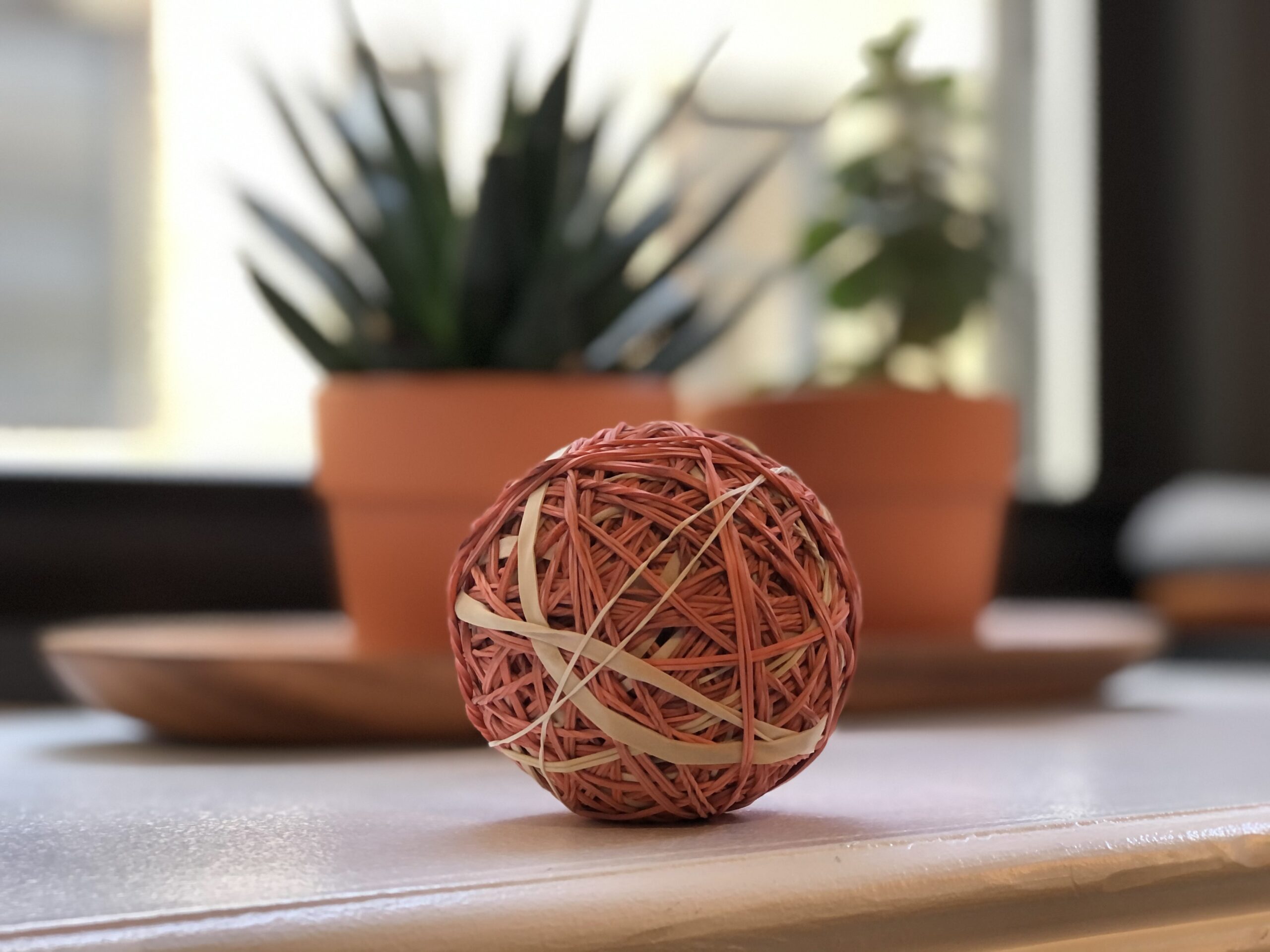
I still enjoy reading The New York Times in print, so five days a week, a copy of the paper shows up on my doorstep, wrapped in a rubber band. A few years ago, I wasn’t sure what to do with all those rubber bands, so I decided to try to build a rubber band ball.
If you’ve never built a rubber band ball, the hardest part is building the core. You take a rubber band and slowly tie it into a few knots. Then you do the same thing with another rubber band, and then another. Eventually, you’ve got a few knots, and you push them all together into what will become the nucleus of the ball, and then wrap a few rubber bands around them to tie them tight. The core isn’t very big, so you have to wrap the rubber bands around four or five times to get them to hold firm.
At the start, the rubber band ball doesn’t look like much. In fact, it looks pretty odd. If you tried to tell someone that the thing you were building was a rubber band ball, they’d probably look at you funny. What you’ve created is a misshapen, half-inch-wide tangle of rubber bands, with rubbery ends sticking out at various parts.
But then you start adding to it. Every day, you wrap another rubber band around it. After a week or two, you’ve still got a weird looking ball. But over time, day by day, it grows a little. A month or two later, you’ve got something that roughly looks like a marble. Five or six months later, it looks like a gum ball, maybe an inch or two wide.
You keep adding to the ball, every day. The individual bands don’t seem to make much of a difference. But every few months, you look at it carefully and realize: This thing’s really growing. It’s not a single band that makes a difference, but hundreds of them, built atop one another, that have turned that tiny core into something real.
Trying to build an audience isn’t all that different. At the start, you’ve got some family and friends paying attention to your work. But you keep putting in the hours, every day, every week, and over time, things start to grow. You don’t always notice the growth — a few new subscribers there, a new fan there. The daily growth isn’t enough to turn heads. But you notice it when you look back every quarter, every year. The audience is a little bigger, a little more loyal than it was before.
You keep putting in the work. It’s rarely a case where one single step changes the trajectory of your work. It’s usually a series of small efforts, done over and over again, that build into something big.
An audience isn’t built from a single viral piece of work. Audiences are built by building trust with your fans, by doing great work that resonates over and over again. Building an audience is an act of patience, of repetition, of care.
In a way, you’re building a rubber band ball. Add to it every day, and give it time. It’ll grow.
———
That’s my rubber band ball, four years on and still growing.
I miss those hour-long flights to Boston to Pittsburgh — just enough time to pull out the laptop and work on a deck or a memo for 45 minutes. I miss those longer flights out west — 90 minutes of work, an hour of reading, and then a movie I’d never seen before. I miss that time in the airport lounge, that feeling when I know I’ve only got 20 minutes to reply to as many emails as I can before the flight boards.
I suppose what I really miss, as I think back on it, is that flying puts me in a place of focused work. At home, I can get easily distracted, but when I fly, I usually don’t buy the WiFi on the plane. That means that when I’m sending those emails before I take off, I’ve got a timer in my head — 20 minutes, 15 minutes, 10 minutes before I disconnect. It means that when I’m on the flight, I can only do the projects I’ve preloaded onto my laptop before I took off. It means that I can do the work I have to do — and then say, alright, it’s time for a break.
The structure of flying seems to put me in the right mood to work. I tend to do really good, focused work on flights. I think part of it is the timing of the flight, and part of it is the feeling that it’s OK to take a break and spend 90 minutes watching a movie — a mid-day movie on a Monday would feel like a waste of time on a normal day, but on a flight, it feels pretty normal. One more thing: On flights, I’m not bouncing from call to call. That helps with focus, too.
I know I won’t be traveling again for a little while longer, and this isn’t a post where I’m going to make suggestions as to how to recreate the feeling of travel from home. It’s just this moment where I’m thinking about the way my work has changed in the last year, and the way it might change again a few months down the road.
Anyway, I miss flying.
———
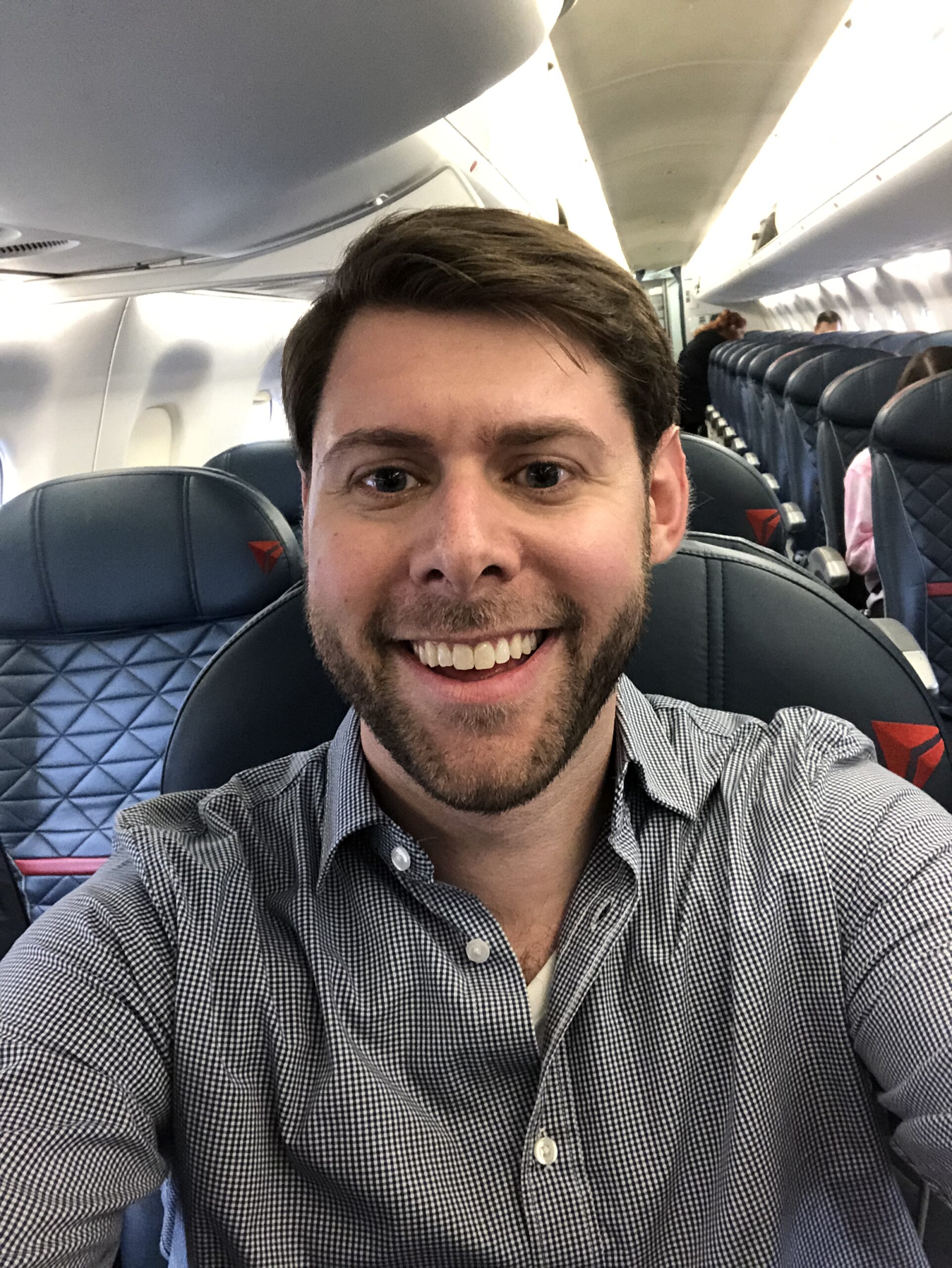
That photo’s aboard a flight home from South Carolina to New York on March 12, 2020 — my very last work trip of the year.
There’s a project I’m working on right now, and I’m pretty excited about it. Sometimes, I’ll spend a few minutes thinking about the positive outcomes: What might come of the work, how others might want to get involved with it, too. I’ll daydream a little about where it might lead a few months or a few years down the road, thinking of what happens if this and that and the other thing all go right. If I really get lost in my own head, I’ll start wondering about how I’d publicize the project — the interviews I might do, the outlets that might want to cover the work.
And then I remember that every hour I waste thinking about the work instead of doing it is an hour I can’t get back. None of this can happen until I start doing the work first, and who knows where the work will actually lead me.
So: I forget about the next steps and the what ifs, and I get back to work.
In 2011, I got the chance to participate in a small startup competition in D.C. to talk about Stry.us. The next day, I got an email from a woman named Tiffany Shackelford, then the Executive Director of Association of Alternative Newsweeklies. She wanted to know if I’d be interested in speaking at the annual AAN conference.
I hadn’t met Tiffany at the event, but she saw something the night before that piqued her interest.
At first, I didn’t know what to make of her offer. I was 24, and I’d never spoken at a journalism conference before. Still, Tiffany thought there might be a place for me on the AAN stage.
I couldn’t make the event that year, but Tiffany promised she’d be in touch again. Sure enough, the next year, I got another note from Tiffany: Would I be interested in pitching a talk for that year’s event?
That’s how in June 2012, at the AAN conference in Detroit, I led a talk about responsive design for newsrooms.
Since, I’ve been lucky to speak at events all over the world. But Tiffany was the very first to give me a shot, and for that, I’ve always been grateful.
Tiffany died this week — she’s one of the more than 300,000 Americans who have died from COVID-19. Reading remembrances from other journalists about her, it became clear: What Tiffany did for me, she also did for countless other journalists. There are a lot of us in the journalism world who are better off because Tiffany was in it.
Thanks for everything you’ve done, Tiffany. I’ll do my best to use my platform to give others that first shot, just like the chance you gave me.
As we wrap up 2020, and look towards the new year, I wanted to say a few words:
So many of us are hoping that when the calendar flips to January, we’ll slowly begin to move towards a more normal world. As I look through my Instagram feed, nearly every day, I see another photo of a friend receiving their first shot of the COVID-19 vaccine. That alone is reason for optimism.
But no matter what 2021 brings, I wish for you to think back upon this year as a reminder: of how connected we can be, when we choose to be; of how kind we can be, when we choose to be; of how giving we can be, when we choose to be; of how engaged we can be, when we choose to be.
2021 will be an opportunity, too, to choose to work for a better world, in whatever ways you can. There is no returning to the lives we had before this virus, but together, we can build a world that is different, exciting, and far more just. I wish for you the courage to choose that future.
In this new year, I wish you and your loved ones good health, and I wish you the optimism to believe that brighter days lie still ahead.
An unusual thing has happened in the second half of 2020 for my consultancy: I’ve started turning away work.
When I started this business, if a client approached me and I thought it was a good fit, I almost always said “yes” to the work. Even as I took on additional clients, I kept saying “yes,” since I still had a manageable workload.
But as 2020’s progressed, and I’ve learned more about what each client needs, and how time-intensive some of these projects are, I’ve gotten more selective about saying “yes”. I know that saying “yes” to a project I don’t have the time for is even worse than saying “no” — because it keeps the client from finding another partner to take on the work they need done.
I hate saying “no.” My default position is “yes” — I like trying to find solutions, and I like trying to help. I especially hate saying “no” to exciting projects. But sometimes, “no” is the right answer.
And even when I say “no,” I try to be transparent about why I’ve said so, and when I might be able to work with this client. A few clients have asked if they can sign on to start working with me a few months down the road, and we’ve set up a schedule that works for everyone. A lot of these are businesses that have been around for years or decades — turns out that waiting another 60 or 90 days to get started isn’t that big of a deal.
Other times, I’ll recognize that the client needs help ASAP, and I’ll pass along the lead to another consultant or freelancer who I think can help. If I can direct them to a good partner to take on the work, that’s still a fantastic outcome.
I know as the business grows, I’ll have to be even more selective about what I say “yes” to. Taking on new clients? Launching new products? Hiring staff for Inbox Collective? These aren’t questions I can easily say “yes” to. I need to continue to be honest with my partners — and myself — about what I can truly do, and do well.
Every year, I set a goal: Write one thing per week here on the blog. This post is no. 50 — which means I’m right on track, despite everything that’s happened this year.
The blog is always a bit of time capsule, and that’s especially true this year. Looking back, it’s easy to see the fear (and uncertainty) of the early days of this pandemic; the excitement (and uncertainty) when I hit a year of Inbox Collective; the optimism (and uncertainty) as I started to look forward to 2021. (If anything, it was certainly a year of uncertainty.) But if I had to pick just five blog posts I’m most proud of this year, I’d start here:
When I was younger, working as part of a larger newsroom, I had a bad habit: I always wanted to win.
This wasn’t about getting big projects done on behalf of my team. These were moments when I got hung up on some petty issue, decided someone was in my way, and that I needed to show them not just that I was right, but how right I was.
Why? Stubbornness, mostly. These were fights over tiny issues only I’d noticed. I wasn’t fighting over worthy causes — I’d found a few molehills, and decided to defend them like mountaintops.
But as I’ve gotten older — and in particular, ever since I started running my own business — I’ve learned that I need to give up on most of these fights. It helps to have a great support system that I can turn to when I’m feeling stubborn to remind me to ease up and move on. But it’s also just a matter of time: I can’t afford to waste time on these trivial issues. (I mean this literally: I bill by the hour. Losing a few hours over a silly fight is a money-losing cause.)
When I start to get stuck on one of these fights, I try to find the path of least resistance. Is there an easy way out? Is there an alternative solution? Is there a way for me to communicate clearly and quickly what needs to get done so we can all move on? I try to find the path, and then I get back to work.
At the end of the day, the work is more important than being right. It does you no good to go looking for the fight. Find the way forward, and keep moving on to bigger things.
It’s easy to spend your week putting out fires. You wake up on a Monday morning, ready for a big week of work ahead. You’re going to take on some significant projects this week, and really get some stuff done.
Then the requests start coming in:
• Something’s wrong, and it needs to be fixed ASAP.
• A manager emails with requests that require immediate attention.
• A colleague needs help on a project that has to launch in mere hours.
• A key tool breaks, and it’s all hands on deck to make things right.
The week goes on like that: Urgent project after urgent project, until you look up on a Friday and realize that you never got the chance to do the work you promised yourself you would do.
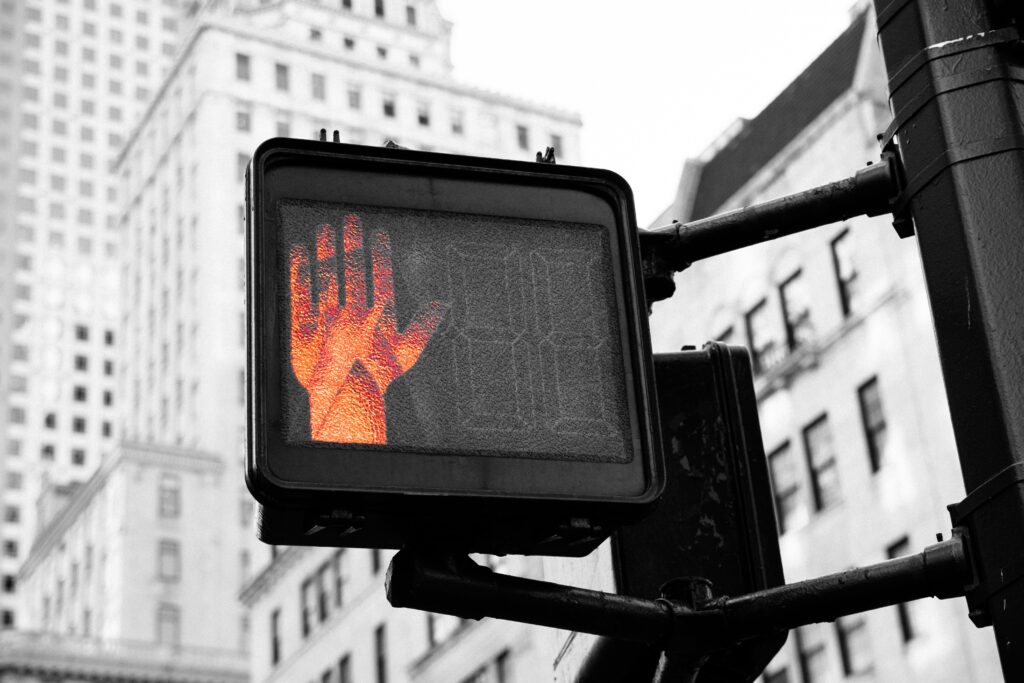
Don’t let the urgent drown out the important. Make sure you block out time for the big, focused work. Otherwise, it’s too easy to go through the week putting out fires without ever actually getting to the work you really want to do.
———
That photo of Jersey City at sunset comes via Uvi D on Unsplash.There’s no real reason why I chose that photo for this post — I just thought it looked nice.