
Try On Lots of Hats.

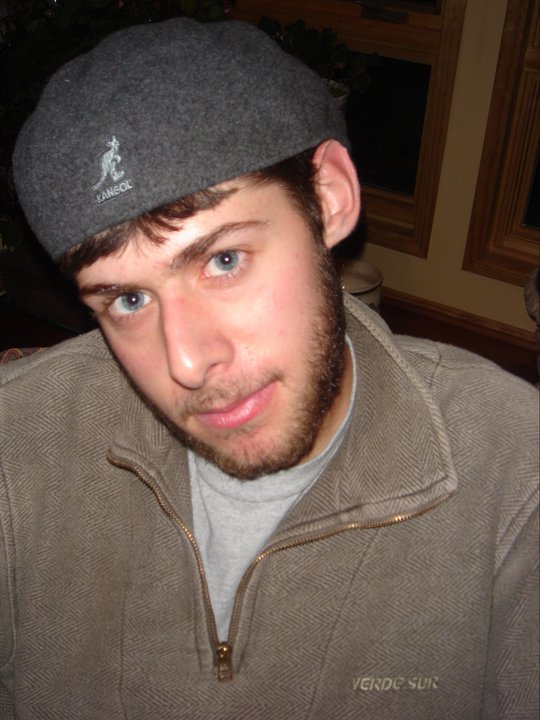
I can’t tell you why, but when I was 18, I decided I wanted to be the kind of guy who wore a Kangol hat.

I wore it for a few months, very much as an experiment. I was a kid trying to figure who I was and how to build a sense of style that felt true to me.

It’s been almost 20 years, so I can say, with absolute confidence now: I was definitely not a Kangol hat kind of guy. But there’s still a little bit of that sense of experimentation in everything I do.

I try on new hats, more figuratively than literally, all the time. What would it look like for me to start a business? To move to a new city? To become a dad?

Lots of what I try to do every year is test out new stuff and see how it feels. Is this for me? Does it feel true to who I am?

I keep trying on new hats, always with the hope that I might find something great. Sometimes, I do. Sometimes, I end up looking back with embarrassment on the things I’ve tried.

You just have to keep trying anyway.

———

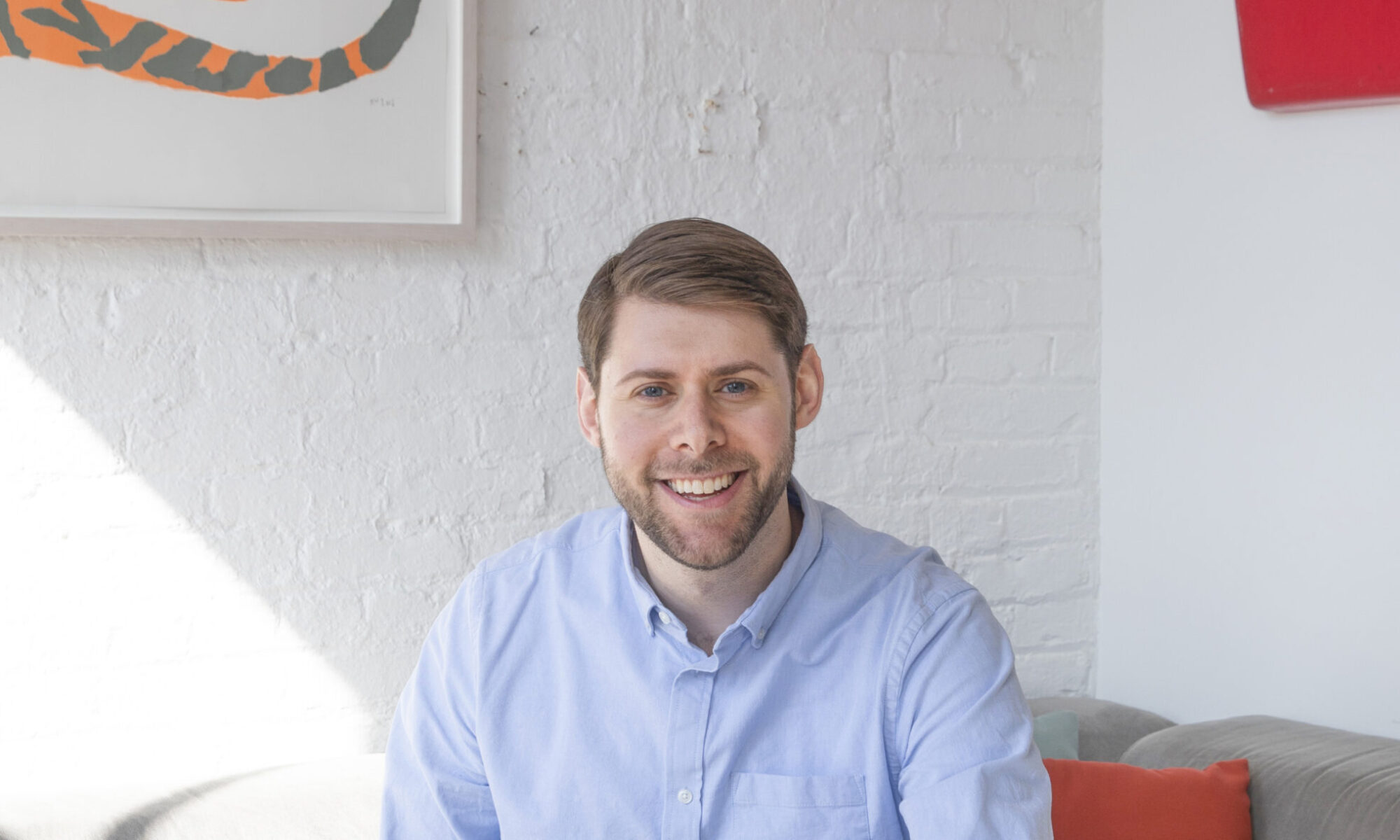
Yeah, that’s me at 18 in a backwards Kangol hat. You live, you learn.

Are You Still Curious?

I’ve been running Inbox Collective for almost eight years. Before that, I spent seven years in email roles at the New Yorker and BuzzFeed. Spending 15 combined years in a single space — certainly one as niche as email — is an awfully long time.

A friend asked me the other day: Do I think I’ll work in this space forever?

I told them: I’ll keep doing this as long as I stay curious about it.

Something I love about my job is that I keep learning new things. Clients challenge me every week with questions I don’t know the answer to. I still love finding the right answers.

But I imagine that one day, the curiosity won’t be there. (It would be easy to get complacent and lean on answers that worked a decade ago — even if they don’t work anymore.) And when that happens, that’ll be the sign that it’s time to move on.

Until then, as long as I stay curious, I’m excited to keep working in a space I really love.

———

That’s a photo of me taken back in 2017 at an email conference in Brisbane, Australia. Tough to believe that I’ve worked nearly a decade in this space since that photo was taken!

You Still Have to Put in the Work.

I have been doing the consulting thing since 2019. I have done more calls, more audits, more interviews, than I ever could have imagined. Sometimes, I think that I’ve done so much of this work that I’ve seen it all — that there’s nothing left to learn.

Every time I start to think that, I stumble onto a new problem, a new challenge, or a new opportunity, and I realize I don’t know how to do this just yet. No matter how far I go with Inbox Collective, there is always more work to put in, new things to learn, and lots to be curious about.

Sometimes, people ask me if I think I’ll do this job forever. I doubt it. One day, I’m sure I’ll find that I’m not interested anymore in putting in that work, asking that extra question, or trying to learn that new thing. That’ll be the sign that it’s time.

———

That photo of three men washing windows in Singapore comes via a photographer named Victor and Unsplash. It doesn’t have much to do with this post. I just liked the photo.

You Can Make Time For It — If You Want To.

Ben hikes through a shady section of a dirt hiking trail in Utah.

A funny thing I’ve noticed lately: I’ll be chatting with a friend and mention something that I was able to make time for — going skiing, spending time with the kiddo, reading books. And they’ll say, “Oh, I wish I had time for something like that!”

But when you probe a little deeper, you find that they often do have the time. We’ve all met people who are willing to wake up at 6 so they can squeeze in a workout before work, but who can’t seem to find the time to cook dinner.

And I get it: We’re all busy, and there’s never enough time for everything. But if there’s something you really value, there’s often a way to make space for it.

For me, one of those things is getting outside. I was feeling a little sluggish the other day, and I had a break between calls. I sat down, ate some lunch, and watched crappy TV on the couch for an hour. Weirdly, lying down on the couch didn’t particularly help with that sluggishness!

And as I went downstairs to go on my calls, I found myself asking: Why didn’t I get outside for a 20-minute walk to clear my head?

Yes, I’m busy. No, I don’t have time for everything. And no, I don’t need to fill every minute of the day with something.

But I have 20 minutes for a walk. I have time to read before bed. I can move things around so I can do the stuff I want.

I do have the the time if I want it.

———

That’s a photo I took last summer of the kiddo and I on a little hike together here in the mountains.

Running on Empty.

a rusty old gas tank in front of a barn in Latvia

This was one of those weeks where it felt like everything happened. I launched a new product. I held a webinar. I talked with 15 different clients. I sent a thousand emails (give or take). I helped a ton of clients with end-of-the-year projects. 

And then Ben got sick, and so did I.

There was a moment on Friday afternoon when I thought about taking on a bit more work. I had a lot more stuff to do. But Ben was down for a nap.

So I took a nap, too.

You can’t operate on empty. You have to make time for yourself. Take a week. Exercise. Cook yourself dinner. Read a book. Go to bed at a reasonable hour.

Do literally anything other than work.

Yes, you’re busy. We all are. But the work isn’t going to be very good if the tank is empty.

———

That photo of an old gas tank, left out to rust somewhere in Latvia, was taken by Krišjānis Kazaks and shared via Unplash.

The Moments Before Launch.

I’m launching a new paid product for my readers this week, and I don’t know how it’ll go. We might sell a lot of the product, and we might not sell much. (We’ll sell something, I hope!)

All I can really control is the process. I’m proud of the work that’s gone into building this product. We’re thinking about this product in a smart way, I think. We’ve asked lots of questions; we’ve reached out to lots of people for feedback. The product itself is pretty darn good.

What I love, though, is this moment right before the product goes out into the world. I’ve worked hard on it and made it better and better. The work that went into it was really good. And even though I worked hard it on, I don’t really know how readers will react until I put it in front of them.

I wish I had more control over what happens next, but I don’t. (The marketing plan is good, but it’s just a plan!) I’ll announce the product this week, and whatever happens, I’ll learn from it. If we sell a lot, if we don’t — I’ll learn more that’ll inform whatever I make next.

———

That photo of hot-air balloons flying over Albuquerque comes via Ian Dooley and Unsplash.

Take More Swings.

Simon Castro gets into the windup in the San Antonio's 2-1 victory over the Frisco Rough Riders on May 23, 2010.

About a decade ago, I made a commitment to start writing more on danoshinsky.com. It was a small thing — the goal, at first, was just to have a place to write. I was in a job at the time that involved a lot of technical writing (subject lines, captions, stuff for SEO), but I wanted a place where I could do my own thing and share what I was learning.

So I made a commitment to write once a week.

And one of things you learn when you start writing once a week is that some posts are good, some are great, and some are lousy.

But you also learn: By taking more swings, you have more chances for success.

Let’s lean into the baseball analogy here. Let’s say I hit .300 on my posts — three out of every 10 posts is something I’m super proud of. More swings means more opportunities for success.

A hit rate of .300 on 12 posts means I’d have four hit posts a year.

But by writing weekly, I’ve got 52 posts — which means a hit rate of 17 posts.

Could I go further? Maybe I could up my outage of posts. If I somehow wrote 365 posts — and I feel dizzy just thinking about writing that much — I’d have 109 hits in a year. (Though honestly, if I wrote that much, I wonder if my hit rate would naturally go down. More output doesn’t mean I’d be consistent with the quality of my writing.)

But the point is: It’s a good thing to take more swings. Not everything is a hit, and that’s OK. But every time I take a swing, I’ve got a chance to do something great.

———

I took that photo at a San Antonio Missions minor league baseball game back in May 2010. The pitcher is Simon Castro, who went on to pitch parts of three seasons in the majors with the Chicago White Sox, Colorado Rockies, and Oakland Athletics.

It’s One Day.

A Denver hockey player fires a puck at the goal.

One of my favorite things to do after one of my teams loses is to check the message boards or comments where fans of that team post.

After a win, fans are always in a good mood. Their team won, the team’s players are heroes. It’s just one win — but hey, this probably means we’re going to win it all!

But after a win, everyone’s on their worst behavior. The quarterback can’t win the big one! The point guard needs to be benched! The pitcher should be cut!

It’s an odd tradition, I admit. Why read the comments after losses? But I like to do it as a reminder: We’re never as good as we are on our best days, and never as bad as we are on our worst days.

And today? It was just one day.

———

That photo of a hockey game, featuring Denver University and the University of Minnesota-Duluth, comes via photographer Logan Weaver.

Find Your One Liner.

Pete Carroll signs a USC football helmet in 2010.

There was a wonderful story the other day from Ben Malcolmson, right-hand man for NFL head coach Pete Carroll, in which he wrote about finding your true identity. He told a story about a talk that Pete once gave:

During his talk that day, Pete asked the room: “How many people here have a philosophy for life or for work?”

Probably three-quarters of the room raised their hands. Then he asked: “How many people could tell me that philosophy in one line?” All but three or four arms bashfully went down. Pete called on one of the people who had kept their hand raised and had them share their philosophy in front of the whole room.

For the longest time, I’ve had a simple one: “Find the things you love and the people you love and make time for both.” Whenever I feel a little lost or uncertain, that one liner helps remind what I need to do to get back to a good place.

Malcolmson has some suggestions on how to find your one liner. It’s worth taking the time to try to find yours.

–––

That photo of Carroll was taken in 2010, when he was the head coach at USC. It was taken by Warwick’s Books, published on Flickr, and used here thanks to a Creative Commons license.

Finding the Right Signals.

Blurred out faces on a Zoom call, with a green coffee mug in the foreground.

I’ve done a few AMAs on Zoom this year. These are private calls where teams can join and ask me, well, anything. They don’t tell me what they’re asking in advance. They show up, surprise me with questions, and give me the chance to share a few ideas back.

They’re a lot of fun to do — and I’m especially thrilled when I get asked a question and I have a link — or maybe even a few — from Inbox Collective that I can share to help answer it. 

A few years ago, when I started publishing original stories on the site, I told myself that I wanted to use Inbox Collective to answer the big newsletter questions that I hadn’t seen answered elsewhere. And I’m finding through these AMAs that I’ve done a pretty decent job of that!

I’m always looking for signals that I’m on the right track. Those could mean page views or email replies or client inquiries, but sometimes it’s the unexpected signals — like having plenty of links to share on Zoom calls — that are an indicator that I’m doing something right.

———

That photo of a blurry Zoom call comes via David Montgomery and Unplash.