Figure Out Your Level of Risk.

A pile of white, multi-sided dice.

I had a conversation a few weeks ago with a friend who’s thinking about leaving her job to start her own thing. She asked for my advice, so I gave her something I wish I’d thought more about at the start: When you start a business, you need to figure out your level of risk.

Some people are willing to place big bets on their business. There are plenty of stories out there about people who hired big teams before they had a proven product or put tens of thousands of dollars on a credit card with no clear path to paying off that debt. Some are OK taking on a lot of risk.

I tend to be a bit more risk-adverse. So much of my business is built around coaching calls, where I work with small teams for a low annual fee. If I took on larger projects, I’d make a lot more money, but coaching is far more stable — I start the year knowing how much I’ll be bringing in that year. My coaching clients tend to renew their contracts year after year. Bigger projects, on the other hand, come and go.

Before you start, it really helps to understand how much risk you’re willing to take on. My strategy means that my business has a fairly high floor but a slightly lower ceiling. You might be willing to take bigger swings for a bigger reward — even if it means the chance of failure is a lot higher.

———

That photo of dice comes via Zoshua Colah and Unsplash.

Try On Lots of Hats.

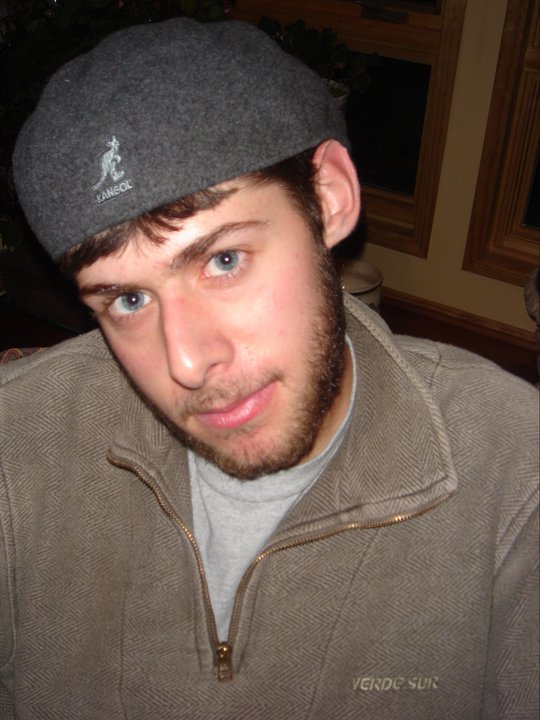
I can’t tell you why, but when I was 18, I decided I wanted to be the kind of guy who wore a Kangol hat.

I wore it for a few months, very much as an experiment. I was a kid trying to figure who I was and how to build a sense of style that felt true to me.

It’s been almost 20 years, so I can say, with absolute confidence now: I was definitely not a Kangol hat kind of guy. But there’s still a little bit of that sense of experimentation in everything I do.

I try on new hats, more figuratively than literally, all the time. What would it look like for me to start a business? To move to a new city? To become a dad?

Lots of what I try to do every year is test out new stuff and see how it feels. Is this for me? Does it feel true to who I am?

I keep trying on new hats, always with the hope that I might find something great. Sometimes, I do. Sometimes, I end up looking back with embarrassment on the things I’ve tried.

You just have to keep trying anyway.

———

Yeah, that’s me at 18 in a backwards Kangol hat. You live, you learn.

Be Willing to Prove It.

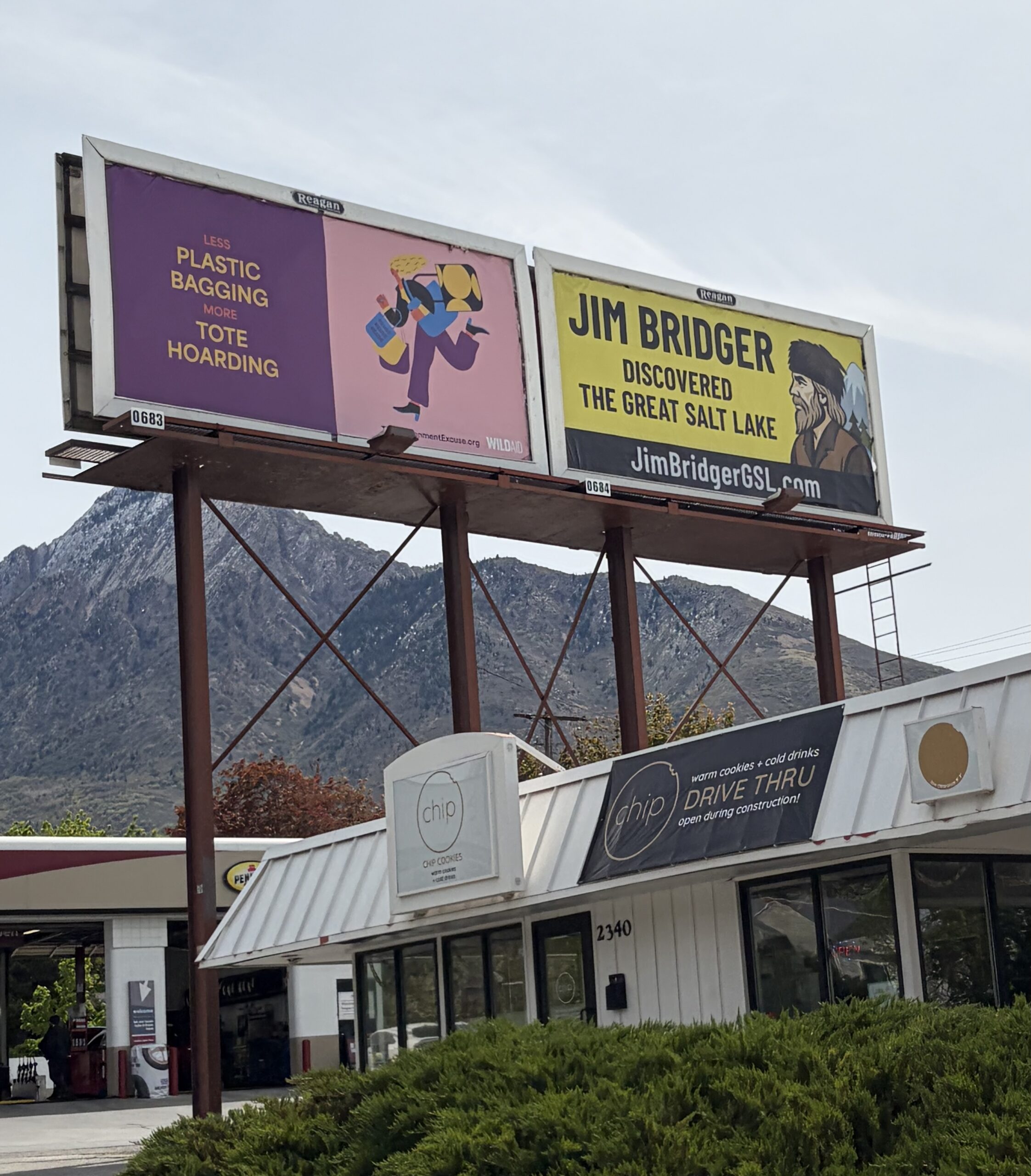
The Jim Bridger billboard, as seen roadside in Salt Lake City.

A few months ago, I started noticing billboards around town with a photo of a guy who looked kind of like Davy Crockett and a message: “Jim Bridger discovered the Great Salt Lake.“ I didn’t think much of it.

But I kept seeing them — you can’t drive five minutes in town without seeing a billboard with Jim Bridger’s face on it.

So then I got curious: Who was spending all this money to promote an explorer who died almost 150 years ago?

Turns out: It’s actually an experiment in proving that advertising works.

There’s a company, Reagan Outdoor Advertising, that owns all these billboards. They had a challenge: How do you prove the ROI, or return on investment, on a billboard to an advertiser?

So they came up with their own experiment.

They told the Salt Lake Tribune that they surveyed locals about Jim Bridger before the billboards went up, and they’ll do so after the campaign is over. Then they’ll have data to share, showing that locals went from knowing nothing about Bridger before to knowing at least a little bit about him after. A lot of locals are going to say, “Yeah, isn’t he the guy who discovered the Great Salt Lake?“

And then they’ll make the pitch to local businesses: If these billboards could have that kind of impact about a previously-anonymous 19th century explorer, then they could surely have similar impact for a modern brand.

It’s a great reminder: If you’re going to make the claim, you need the data and the story to prove it first. And if you don’t have the data, well: You might need to get creative to dig it up.

———

I took that photo of the Jim Bridger billboard in Salt Lake. It’s the same billboard everywhere — same copy, same yellow background, same drawing of Bridger.

You Still Have to Put in the Work.

I have been doing the consulting thing since 2019. I have done more calls, more audits, more interviews, than I ever could have imagined. Sometimes, I think that I’ve done so much of this work that I’ve seen it all — that there’s nothing left to learn.

Every time I start to think that, I stumble onto a new problem, a new challenge, or a new opportunity, and I realize I don’t know how to do this just yet. No matter how far I go with Inbox Collective, there is always more work to put in, new things to learn, and lots to be curious about.

Sometimes, people ask me if I think I’ll do this job forever. I doubt it. One day, I’m sure I’ll find that I’m not interested anymore in putting in that work, asking that extra question, or trying to learn that new thing. That’ll be the sign that it’s time.

———

That photo of three men washing windows in Singapore comes via a photographer named Victor and Unsplash. It doesn’t have much to do with this post. I just liked the photo.

Running on Empty.

a rusty old gas tank in front of a barn in Latvia

This was one of those weeks where it felt like everything happened. I launched a new product. I held a webinar. I talked with 15 different clients. I sent a thousand emails (give or take). I helped a ton of clients with end-of-the-year projects. 

And then Ben got sick, and so did I.

There was a moment on Friday afternoon when I thought about taking on a bit more work. I had a lot more stuff to do. But Ben was down for a nap.

So I took a nap, too.

You can’t operate on empty. You have to make time for yourself. Take a week. Exercise. Cook yourself dinner. Read a book. Go to bed at a reasonable hour.

Do literally anything other than work.

Yes, you’re busy. We all are. But the work isn’t going to be very good if the tank is empty.

———

That photo of an old gas tank, left out to rust somewhere in Latvia, was taken by Krišjānis Kazaks and shared via Unplash.

Take More Swings.

Simon Castro gets into the windup in the San Antonio's 2-1 victory over the Frisco Rough Riders on May 23, 2010.

About a decade ago, I made a commitment to start writing more on danoshinsky.com. It was a small thing — the goal, at first, was just to have a place to write. I was in a job at the time that involved a lot of technical writing (subject lines, captions, stuff for SEO), but I wanted a place where I could do my own thing and share what I was learning.

So I made a commitment to write once a week.

And one of things you learn when you start writing once a week is that some posts are good, some are great, and some are lousy.

But you also learn: By taking more swings, you have more chances for success.

Let’s lean into the baseball analogy here. Let’s say I hit .300 on my posts — three out of every 10 posts is something I’m super proud of. More swings means more opportunities for success.

A hit rate of .300 on 12 posts means I’d have four hit posts a year.

But by writing weekly, I’ve got 52 posts — which means a hit rate of 17 posts.

Could I go further? Maybe I could up my outage of posts. If I somehow wrote 365 posts — and I feel dizzy just thinking about writing that much — I’d have 109 hits in a year. (Though honestly, if I wrote that much, I wonder if my hit rate would naturally go down. More output doesn’t mean I’d be consistent with the quality of my writing.)

But the point is: It’s a good thing to take more swings. Not everything is a hit, and that’s OK. But every time I take a swing, I’ve got a chance to do something great.

———

I took that photo at a San Antonio Missions minor league baseball game back in May 2010. The pitcher is Simon Castro, who went on to pitch parts of three seasons in the majors with the Chicago White Sox, Colorado Rockies, and Oakland Athletics.

Find Your One Liner.

Pete Carroll signs a USC football helmet in 2010.

There was a wonderful story the other day from Ben Malcolmson, right-hand man for NFL head coach Pete Carroll, in which he wrote about finding your true identity. He told a story about a talk that Pete once gave:

During his talk that day, Pete asked the room: “How many people here have a philosophy for life or for work?”

Probably three-quarters of the room raised their hands. Then he asked: “How many people could tell me that philosophy in one line?” All but three or four arms bashfully went down. Pete called on one of the people who had kept their hand raised and had them share their philosophy in front of the whole room.

For the longest time, I’ve had a simple one: “Find the things you love and the people you love and make time for both.” Whenever I feel a little lost or uncertain, that one liner helps remind what I need to do to get back to a good place.

Malcolmson has some suggestions on how to find your one liner. It’s worth taking the time to try to find yours.

–––

That photo of Carroll was taken in 2010, when he was the head coach at USC. It was taken by Warwick’s Books, published on Flickr, and used here thanks to a Creative Commons license.

You Can Do More Now.

We went on a hike this weekend. It was only four miles, but it took four hours — we started at about 8,000 feet, then went more than 1,000 feet up a mountain, all while I carried a two-year-old in a carrier on my back.

And as we went up, I kept thinking: There’s no way I could have done this last year.

Last year, we did some hikes around Utah, but rarely more than an hour at any one time. We just got too tired to do any more than that.

But the more we hiked, the stronger and more capable we’ve gotten. We can hike stuff now that would’ve been impossible not all that long ago.

All that work opened up new doors, new possibilities.

Keep going.

———

That‘s the view near the top on our hike at Alta. Looking down, you can see another ski mountain, Brighton, in the distance.

Never Better Than Now.

I remember when my dad turned 40. They threw a big birthday party, and friends gifted him this giant inflatable cane. Everyone at the party signed it. It sat in his office for a long time, and I every time I visited dad at work, I remember reading the inscriptions and names on the cane. There were a lot of jokes about my dad officially reaching old age, and I couldn’t disagree.

To a kid, 40 felt like 100.

But I’m 38 now, and looking up at 40 feels strange. I certainly don’t feel 100; I feel a lot closer to the starting line than the finish.

I also know that I don’t know when the finish line arrives.

I’m trying to remind myself that there’s never a right time to do the big stuff. Sometimes I try to tell myself that the timing will be better just a few months down the road, even though I know that’s not true. If you want to do something, you should do it now. Next year, next month, next week — none of this is guaranteed.

There’s never been a better time than right now.

———

I took that photo alongside the harbor in Copenhagen one morning a few weeks ago. I was sitting there, watching the sun rise on a beautiful morning, and thinking about the fact that I do something that lets me travel to such beautiful places and work with such interesting people. I know how lucky I am.

Kick Over Rocks.

I stumbled upon this story the other day about the CEO of Pittsburgh’s airport, Christina Cassotis. I’ve got a soft spot for Pittsburgh — my wife’s from there, we got married there, and about once a year, we fly through there to visit my mother-in-law. The Pittsburgh airport’s a bit dated. It was built to be a hub for US Airways, but now that airline no longer exists, and the airport they have doesn’t really fit with what the city needs.

So I was fascinated to read this story in Pittsburgh Magazine about Cassotis, an executive who, by all accounts, is doing great things to rebuild and modernize the airport. (The rebuild of the airport will cost $1.7 billion, per one account.)

This was my favorite section from that Pittsburgh Magazine article:

“You don’t know how things work around here,” someone yelled after she instituted Uber pickup at the airport soon after she was hired. “Who do you think you are? You think you just come in here and change things?”

“Yeah, I actually do,” Cassotis replied. “That’s my job. My job is literally to kick over rocks. We have to do things differently if we’re going to get different results.”

I absolutely love that mentality. Sometimes, you need leaders who can guide you through a series of slow, steady changes. Sometimes, you need a leader who can recognize when things have been broken for a long time and really roll up their sleeves.

Never be afraid to kick over those rocks.

———

That’s a photo I took at Pittsburgh International Airport back in 2019. When you’re walking to the train to take you to baggage claim, you used to have to walk past two statues of legendary figures in western Pennsylvania history. One is George Washington. The other is former Steeler Franco Harris. I always loved that in Pittsburgh, these two men were given statues right next to each other, and no one seemed to think it was odd that our nation’s first President and a guy who played fullback in the NFL were given equal weight.