
The Only Time Is Now.

The truth is, I almost didn’t leave The New Yorker when I did.

I knew that I wanted to start Inbox Collective. I knew there was a market for my services. I knew that I had an opportunity to help the journalism world.

But I wasn’t sure if the timing was right.

Sally was in nursing school. She was 18 months in, with a year of classes left. She’d graduate in Spring 2020. And my thought was simple: Sally still had a few semesters of tuition left to pay, we were a one-income household, and if Inbox Collective didn’t work, we’d be a no-income household. Leaving my job to start a consultancy was a gamble, and the safe move was to wait until Sally had graduated and gotten a job — sometime in the summer of 2020.

But Sally convinced me to take the leap anyway. She reminded me that I had momentum and a clear opportunity. There was something else, too, something we talked about a lot at the time: The window for me do this was open, and we weren’t sure how long it would stay open. There was risk in leaving my job to start something new, but also risk if I waited too long and the window closed.

Now looking back, if I’d waited, I don’t think I’d ever have left to start Inbox Collective. Taking the leap to start a business is tough enough during good times, but during a recession and a pandemic? There’s no way.

It’s a reminder that when you’ve got something you’re excited about, and something you feel ready to take on, the only time to try it is now. If you wait, the window might close, and you might miss out on that opportunity forever.

———

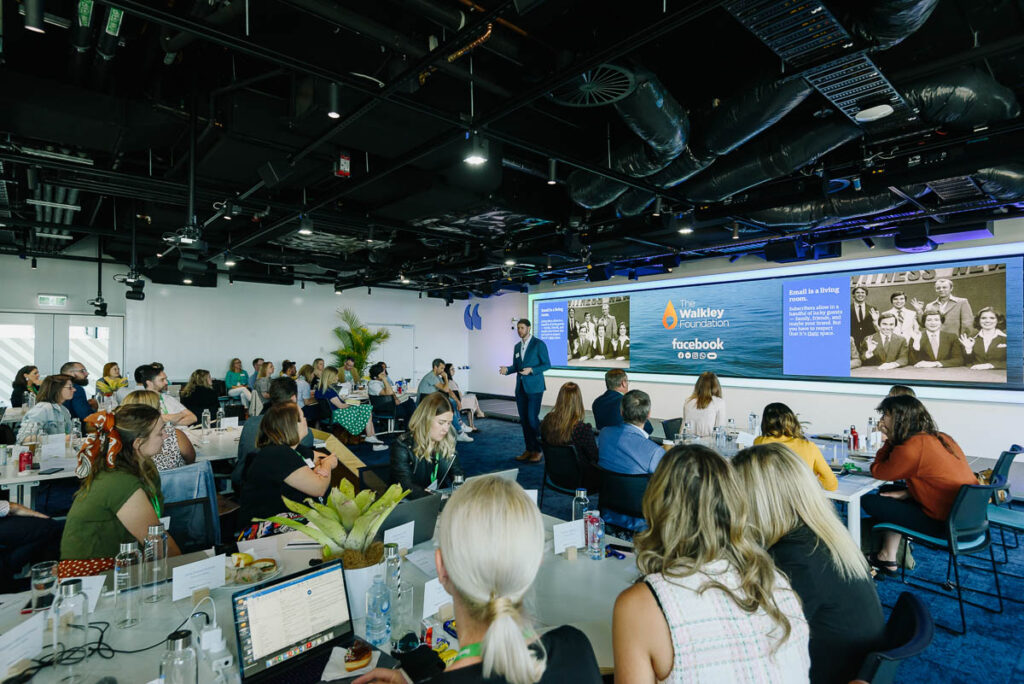
That’s a photo of me giving a talk in Sydney last year — one of many pretty amazing experiences that I couldn’t have had without taking the leap.

Just Go.

Colonel Sandurz: Driver, prepare to move out.

Dark Helmet: What are you preparing? You’re always preparing! Just go.

Colonel Sandurz: Just go.

About a decade ago, I went to a Startup Weekend event for the first time. The idea was simple: Over the course of a weekend, some people with big ideas would attempt to start up a company. They’d get access to mentors, investors, and resources — and by the end of the weekend, if things went well, they’d be well on their way to being able to start a new business.

On the first day, anyone who had a startup idea came to the front of the room to pitch their idea. I remember one pitch — I believe it was an idea for a new app. The guy pitching the idea told the group that he’d been doing research for five years, reading everything he could on the subject, and having conversations with leaders in the space.

The organizers of the event asked: So, in those five years, what have you done with that knowledge? What have you launched or made so far?

He said: I’ve just done research. I wasn’t ready to start yet.

And one of the organizers told him the hard truth: The knowledge you gained from all those books and all those conversations is nothing compared to what you’ll learn from actually starting something. If you’d started five years ago, you’d have so much to show for it: a functional product, lessons of success and failure, knowledge about what actually works for your app. The research and the ideas aren’t worth anything — everything valuable comes from doing the work.

And it was painful to watch as the guy at the front of the room realized: I just wasted five years of my life, and I don’t have anything to show for it.

The secret is: You know enough to start. You have enough to start. And you’re good enough to start.

So don’t overprepare. Get started as soon as you can.

Just go.

———

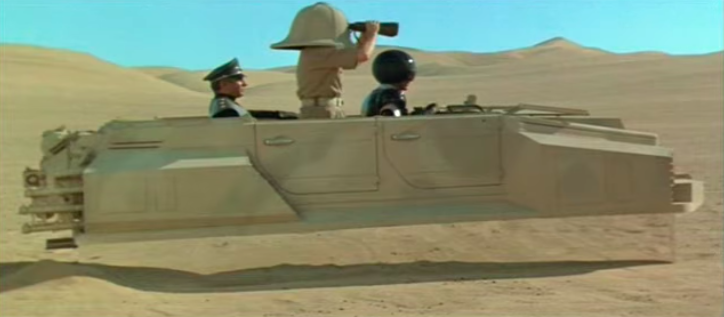
That photo and quote at top comes from Mel Brooks’s classic spoof, Spaceballs.”

The Best Things In Life Are Free.

Believing in yourself is free.

It doesn’t cost a cent to be kind.

You don’t have to write a check to go the extra mile.

You don’t have to go to school to learn a new skill.

Connecting with an old friend costs nothing, and might mean a lot to both of you.

You can’t put a dollar value on hard work.

You can always make time for a good conversation, to offer advice, or to just listen.

There are certain things in life that are available to all of us. They don’t cost a thing, and they don’t require a fancy degree — just time, or kindness, or a little bit of effort. Make time for those things. Be good to others. Listen carefully. Challenge yourself. Work hard. Some of the best things in life are free — and entirely up to you.

———

That photo at top comes via Michael Longmire for Unsplash.

Set Simple Goals For 2019.

I wrote about this in my most recent Things I Believe post, and wanted to expand on it:

Commit to making time for something simple in the year ahead. Make a goal to try the crossword every morning, or to invite friends over for a home-cooked dinner ever week, or to see live music once a month. It’s the little things that often make you the happiest.

This is the time of year when people commit to New Year’s Resolutions — which inevitably end up discarded by the time February rolls around. So instead of setting a major resolution you’ll fall short on, start smaller. Start with something that’s going to help you grow, or feel more connected to your friends or community.

There are three types of goals that are easy to aim for:

Commit to a learning goal — Pledge to make time in 2019 to learn something new. If your company has a learning & development team, make it your goal to attend one of their trainings every quarter. Choose to read more — say, a new book every month. Or you can go even smaller: In 2018, when I realized that I didn’t know enough about the archives of the magazine I work at, I pledged to read one archive New Yorker story every day. It required me to set aside 30 additional minutes a day to read, but it’s helped me learn so much about the writers who’ve shaped this publication.

Commit to a personal goal — Again, keep it small. A few years ago, I pledged to save money by bringing my lunch to work more often. (The back-of-the-envelope math: Bringing a sandwich instead of buying lunch saves me about $1,500 per year. New York lunches are expensive!) You can commit to getting coffee each week with a colleague you don’t work with that often — expand your network at work! You can commit to volunteering more, or to making time for a puzzle. (I’ve never been one for crosswords, but I made it my goal in 2018 to try to get better at them. I’m still not very good, but I can get through about Wednesday in The New York Times, thanks to regular practice.) In 2019, I’d like to try to have friends over for a home-cooked dinner at least once a month. It’s a small goal, but it might push me to try to cook more (which I always enjoy!) and to connect with old friends (always wonderful!).

Commit to a fitness goal — A few years ago, I made it my goal to run 500 miles in a year — and I didn’t come close. (I ran 70 miles in the first three months, and 57 the rest of the year.) Reach goals for exercise are especially hard to hit. Set a more reasonable goal instead: Make it your goal to try a new fitness class every month. Or do what I’m going to try in 2019: To run three races (probably in the 5k-10k range) over the course of the year. One race every four months is doable, but would still be a real achievement for me.

Most importantly: Once you’ve set your goal, find an accountability partner to hold you to it. If you have someone there to keep track of your progress and urge you on, it makes it so much easier to keep going.

———

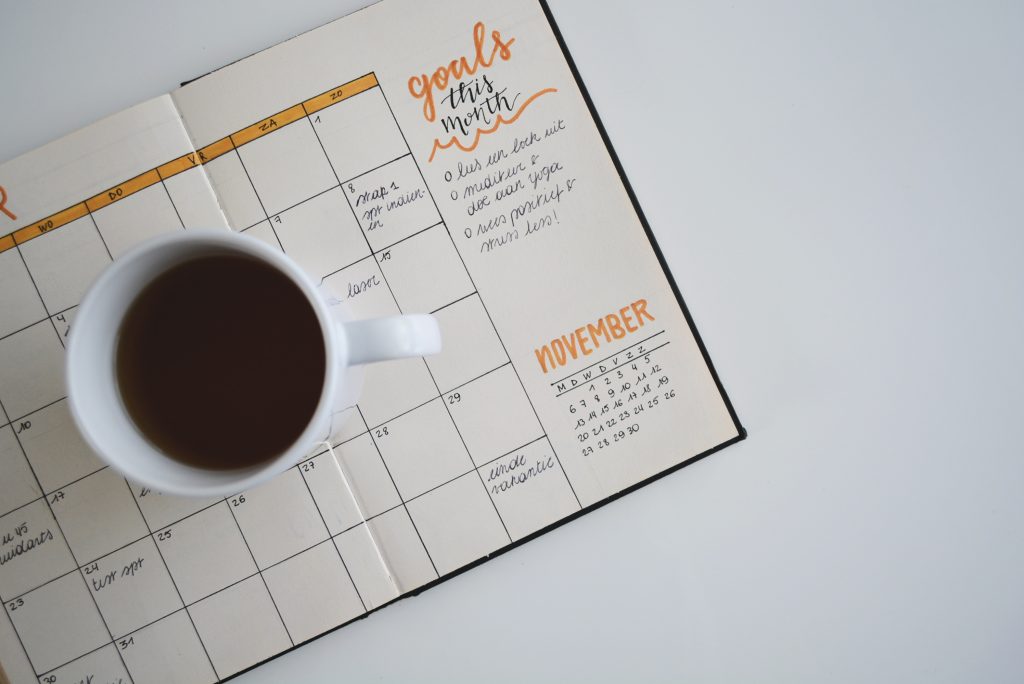
That photo of a planner comes via Estée Janssens and Unsplash.

Try It Before You Realize How Hard It Is.

When I was 17, I got an summer internship working at a paper on Nantucket. It didn’t pay much, but the paper was small — there were maybe eight of us, total, putting out a newspaper every Wednesday — and they gave me opportunities to write. For a high school junior, it was a great job.

Being young had its advantages: I was willing to say “yes” to assignments that more veteran reporters would have been wise enough to say “no” to. I pitched a weekly profile on local workers, a new police blotter column, and several big feature stories. It was a lot for one reporter to take on, but I didn’t have enough experience to know better.

But nothing really compared to something my boss, Don, pitched to me. He’d seen a weekly paper in another town that had printed an ambitious special section. They’d dispatched a handful of reporters and photographers, in shifts, to document a single day in their town, and then packaged it all together into a special section on 24 hours in the life of their city.

Don suggested that instead of having a team of reporters and photographers attempt that, I could do it alone. 24 hours, a bunch of stories and original photos — by myself.

No one else on staff would have been dumb enough to agree to that. Of course, I did.

So what happened? That day, I set out with a camera, a notepad, and my RadioShack tape recorder. (It was 2004.) It was a quite the day: I interviewed people all over the island, ate lobster on the beach (for journalism! And also for my first-ever expense report!), and reported a story from a nightclub that wouldn’t legally allow me to enter their premises for another four years. At one point, in the middle of the afternoon, I stopped by the office to hand over a flash drive of photos. I remember one of my co-workers semi-jokingly announcing, “Look! He’s still alive!”

In the end, we turned my package of stories and photos into its own eight-page section of the paper. My bosses were thrilled, and so was I: By trying something that no one else was willing to try, I ended up with my own section of the paper. Not bad for a summer intern!

Naïveté was my secret weapon that summer. I wasn’t scared or nervous or overwhelmed by anything at the paper — just excited to try new things. That mentality got me all sorts of exciting opportunities. Over and over, I tried things because I didn’t know how hard they were supposed to be. Fifteen years later, I’ve learned how hard many of these things really are — but I’m still trying to push for new things anyway.

———

That’s a photo I took a few years ago, flying above Nantucket.

You Can Learn Something From Everyone.

The next time you meet someone new, try this: Assume they have something they can teach you.

It could be a coffee with a new acquaintance, a big meeting at the office with several co-workers, or a casual chat at a cocktail party. No matter who they are, or what they do, make that simple assumption: They know something you don’t, but they’d be happy to tell you more about it — if only you asked!

What happens when you meet someone and you’re curious to learn more from them?

1) You ask more questions.

2) You listen more closely.

3) You end up building deeper relationships with them — and perhaps sparking the types of conversations that can lead to new ideas and initiatives.

Just that one shift in perspective — this new person has something to teach me! — can change the way you approach a conversation. It can put you in a mindset where you’re curious to learn.

I know I’m sometimes guilty of shutting myself off from conversation before one even starts. I do it for all sorts of reasons: I’m busy, I’m tired, or I’m just disinterested. Sometimes, on my worst days, I’ll sit in on a meeting and think, “I know more than these people.” That’s always a mistake — I’ve eliminated the chance of learning something right from the start.

Instead, keep that open mindset. Ask lots of questions, and be willing to challenge yourself and your own beliefs. You never know when you’re going to meet someone who might teach you something new.

———

That photo of a dog with big ears — the better for listening, obviously — comes via Kyle Smith and Unsplash.

Side Project Stories: Build The Internship You Really Want.

In the spring of 2006, I was finishing up my freshman year at Mizzou, and trying to find an internship for the spring. I was too young for jobs at a big paper — they were looking for a junior or senior who they could hire soon. So I tried two different avenues: One was to apply to smaller papers back home in Washington, D.C.; the other was to try to convince an organization that didn’t have a media presence to let me create one for them.

There’s a college all-star baseball league in the D.C. area, with a team about 15 minutes from where I grew up. I shot their general manager a note, and asked if they wanted someone to “cover” the team for the summer. I’d write game stories and longer features on the team, and cut together video that we’d put on YouTube. It was a low-risk kind of ask. I wasn’t looking for housing, or even to get paid. They didn’t have anyone who did that kind of work already, so anything I contributed would be a bonus for them.

The team said yes — but so did a paper in D.C., and they were offering the chance to cover a handful of teams, including the Washington Nationals. I took the job at the paper.

But here’s a story from The Ringer about Dan D’Uva, who actually followed through on the idea of creating his own summer internship program on Cape Cod, in their famed college baseball all-star league:

In 2002, D’Uva and his New Jersey high school classmate Guy Benson came to the Cape and told the Chatham brain trust they wanted to be the team’s announcers. No team in the league had announcers. But D’Uva and Benson had an unusual sense of purpose. “They were like laser beams,” Bob Sherman, the A’s vice president, said.

D’Uva and Benson called games featuring Evan Longoria, Andrew Miller, and Todd Frazier. When D’Uva graduated from college and began his long climb through the minor leagues, he volunteered to run the Chatham internship program…. When former Chatham interns started getting jobs at MLB Network and Colbert and with various minor league teams, word got around the broadcasting factories of Syracuse and Arizona State that the Chatham job was the one to score.

D’Uva’s now the voice of the Vegas Golden Knights hockey team — logging thousands of hours on air during his high school and college years surely helped — and the broadcasting program he started in 2002 is one of the most desirable broadcasting internships in sports.

This is exactly the kind of thing an ambitious college — or high school! — student could try. Maybe there’s a minor league baseball team near you that could use a photographer to run their Instagram, or a museum in your hometown that would love to start a podcast series. Maybe you could do something part time — just a few hours on a weekend — and combine that with a summer job to help pay the bills. Be ambitious and pitch the internship you want. You might end up building something that could be great for your future career.

Side Project Stories: A Broadcaster’s First Radio Broadcast.

I was reading this story about John Strong, the lead announcer for Fox at this year’s World Cup, and loved this anecdote:

Early in his senior year in high school, Strong roped a friend from the school paper, Eric Olson, into helping him launch an online radio station. Olson helped with funding and the two split announcing duties while broadcasting their high school’s football games. This was 2002, at the tail end of the dial-up era and three years before the launch of YouTube. No one in charge of the school knew what the pair of friends were talking about, but the principal signed off all the same. A few months later, Olson and Strong were calling Lake Oswego football online, with the help of a computer whiz friend who handled the technical aspects. At the time, there were roughly ten such high school stations broadcasting online anywhere. “Do I have the first clue what I am doing?” Strong remembers. “Not really. I am taking all those years of doing it in my head or out loud at the TV and all the stuff I have heard on the TV and I am sort of trying to figure it out. We didn’t have commercials; it was just us online.”

I’ll say it again: You don’t need to wait for someone to give you permission to get the experience, skills, or opportunities you want. You’re good enough to start right now. Find a friend and launch a project. It doesn’t have to be great — just be willing to try something new.

Try Weird Stuff.

I’ve written before about my love of the morning paper — the physical edition that shows up on my doorstep every morning. You never know when you’ll flip through the pages and find something unexpected.

For instance: the obituaries. I’d never go looking for them online, but in the paper, I try to make a few minutes for them. If these people made it to the New York Times print edition, they must have left some sort of mark.

Here’s one from this week that caught my eye:

“Ethel Stein, a weaver who created countless intricate textile artworks and one particularly influential sock puppet, died on Friday in Cortlandt, N.Y. She was 100.”

A particularly influential sock puppet? Go on…

“A more lighthearted part of her legacy came from a side business that grew out of her penchant for repurposing things that others might have discarded. She turned old socks into puppets, first for her son’s nursery school, then for a growing body of fans.

“She began selling them at a booth in a department store in Manhattan; a monograph published by her representative, Browngrotta Arts, says she sold 10,000. One wound up in, or on, the hands of a young puppeteer named Shari Lewis, who by 1953 was making a name for herself in children’s television in the New York market. Ms. Stein, the monograph says, designed several puppets for Ms. Lewis, who would later in the 1950s achieve national fame with Lamb Chop, Charlie Horse and the rest of her puppet pals.”

How incredible is that? An artist’s side project accidentally helped launch one of the most influential children’s TV shows in the country.

Reading about Ms. Stein, her side project reminded me so much of my old co-workers at BuzzFeed. Everyone there had something they did just for fun: a podcast, a newsletter, a weird Tumblr. Some people did physical crafts. Some people were in bands or choirs. Everyone did something.

Try something yourself: something fun, something weird. Make a new thing. You never know where it might lead.

———

That photo is by Kelly Sikkema on Unsplash.

5 Tips For Anyone Graduating From College This Year.

So you’re graduating in May, and you’re not ready for it. I remember the feeling — I wasn’t ready when I graduated from Mizzou in 2009. I wasn’t even sure what I was looking for in a first job!

But now I’m on the other side of the table. I’ve hired entry-level employees at both BuzzFeed and Stry.us — young reporters and editors just like you. Here’s what I’ve learned that might help you get that very first job:

1) Buy your own domain name — When someone gets your resume, the first thing they’re going to do is Google your name. And if you’re pitching an organization on your digital skills, you need something better than yourname.wix.com. Go to domainr.com and search for your name. If you can buy yourname.com, do it. If that’s taken, try something that fits your career aspirations: yournamereports.com, byyourname.com, yournamestories.com, etc. Build a website that showcases your reporting, and make it easy for someone to contact you. (You wouldn’t believe how many people build websites with no contact information!) Forget about business cards — a website is so much more valuable.

2) Launch something — Whatever you’re passionate about, build something around it. It doesn’t matter if it’s good — in fact, whatever you try probably won’t be very good at first — but that’s OK! Create an Instagram around your original photography. Partner with a friend and launch a podcast. Create a TinyLetter around stories you’re reading, and send it every week to your family and friends. Just make something.

3) Make sure your resume doesn’t suck — If you’ve got a skills section, go ahead and get rid of it. (Otherwise, I’m going to ask you about your expertise in the Microsoft Office suite, and you better have a mind-blowing PowerPoint presentation you can send me on the spot.) Instead, go build those skills into every bullet on your list. I want you to tell me about the stuff you’ve done and the stories you’ve told. I want to see numbers: The number of stories you published at a particular outlet, the impact you had an organization. “Handled social media” is an OK line on a resume; “Helped grow our Twitter presence by 10,000 followers” is far better. And make sure you follow these six other tips to craft a great resume.

4) Start scheduling some 15-minute coffees — When you’re in a city with reporters, editors, producers, or leaders you respect, send them a quick note. (hunter.io is a great tool for finding professional email addresses.) Tell them you’re a college student, you’re going to be in their city, you’re a big fan of their work, and you’d like to bring coffee to their desk and ask them 3-4 questions. (Make sure you have really good questions!) You’d be surprised how often people will say yes when they know that, A) Their time won’t be wasted, and B) They don’t have to leave their office.

5) Buy stationery, and send thank you notes — When you’re done with a coffee, send that person a written thank you note. Not an email, not a DM — a thank you note. It’s a small gesture, but it’ll be noticed.

Good luck, soon-to-be grads. You’re graduating into a strong job market, with so many new tools that can be used to tell stories. You’re going to have some incredible opportunities ahead of you. It’s up to you to do something with it.

———

Thanks to Cole Keister for making that graduation photo available on Unsplash.