
Be Willing to Let Things Go.

When I think back on my time at BuzzFeed, there was a lot that made us successful. We hired a talented, diverse group of creators. We invested in learning and development programs so staff could continue to grow in their roles. We built strong product and data teams to provide the resources so we could try things that no other media company could do.

But we also were willing to let a lot of things go.

There’s a long list of BuzzFeed projects that launched — some to significant fanfare — that didn’t work.

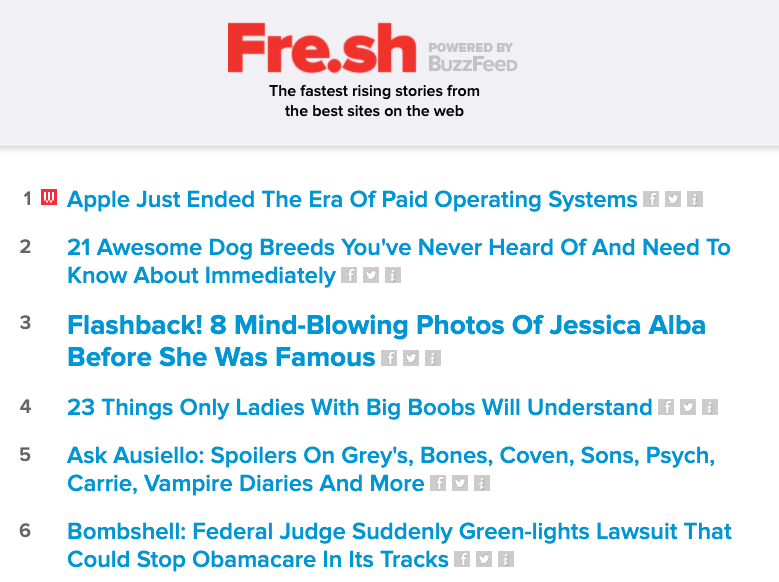
There aren’t many who still remember projects like BuzzFeed University (a program to encourage advertisers to build their own sponsored content), Fre.sh (a dashboard tracking the biggest stories on the internet), or Star.me (a social network that allowed you remix content). We launched these, and quickly realized that they weren’t working.

Sometimes, BuzzFeed launched projects that flopped — but showed a few signs of promise. Often, someone on staff would latch onto those projects and try to figure out how to take what had worked and turn it into something new.

But with certain projects, we knew early on that there wasn’t an audience for the thing we’d built. So instead of compounding our error and continuing to funnel resources and staff into a failure, we let it go, and moved on to whatever was next. There was always another idea that was worth trying.

No one wants to see a project fail. But it happens. Anytime you launch something new, make sure you know in advance how you’ll measure success for this new thing — if you do that, you’ll be able to see clearly when a project works, and when it doesn’t.

When it doesn’t, you may have to let it go. If there isn’t an audience or a need for the project, no amount of tinkering or investing is going to help. Better to quickly move on to the next idea than to lose more time trying to fix what doesn’t work.

———

That’s a screenshot of the BuzzFeed Fre.sh homepage on October 23, 2013. As you can tell from the list of stories here: It wasn’t nearly as useful to readers as we hoped it would be.

Keep Moving.

There is so much we need to accomplish. It can feel overwhelming at times to look at the to-do list and see what still needs to be done. The tasks ahead can feel endless.

But the work doesn’t happen all once. Change happens incrementally. You point yourself in the right direction and slowly start moving there, step by step. It’s only through persistence and time that you’re able to move things forward.

The most important thing is to keep making progress. You won’t always go as fast as you want, and you won’t always get where you’re going as quickly as you want. Even when you reach that destination, you may find that things have shifted — there may be new goals and new milestones ahead. Good.

Keep pushing forward.

Keep trying to make things a little better every single day.

Keep moving.

———

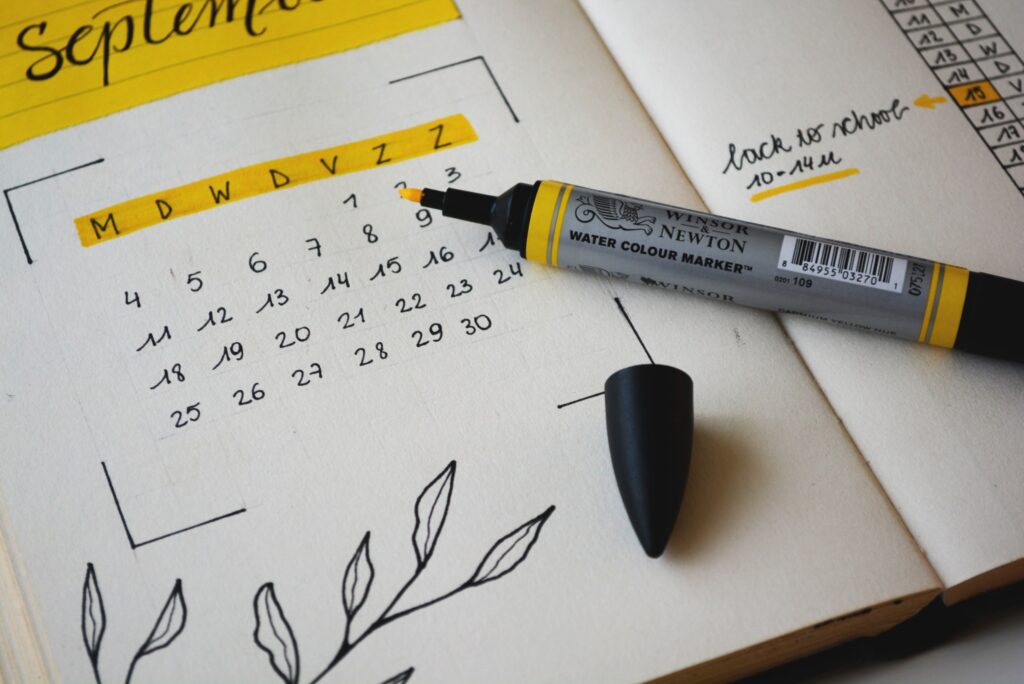
That photo comes via Zac Ong and Unsplash.

A Thought on My 33rd Birthday.

I turn 33 today. A year ago, I was just thinking about leaving The New Yorker. I didn’t know that in the year ahead, I’d get to work with clients across the country and across the world. I didn’t know how much this business would grow. (I’m not sure I even realized that I was building a business!) I didn’t know that I’d have the chance to give talks to teams on four continents. I didn’t realize how familiar I’d get with Zoom. I didn’t know I’d get to spend so much with Sally in such wonderful places: Rio, Salt Lake, Surf City. I didn’t know how much I would learn.

I don’t know what 33 will bring. This year’s been unexpected, eye-opening, and full of opportunity. I hope I get to do it all again, and more, in the year ahead.

Onward.

One Week at a Time.

Something I’ve noticed in my conversations this month: Lots of organizations are trying to craft a long-term plan. 

It’s how we’re used to thinking about the future. You’ll sit down with your team and say: Here’s what we’re going to achieve this quarter. Here are our goals for the year ahead.

But no one knows what will happen next. We’re all making this up as we go along — so trying to craft long-term plans is a little foolish. You’re making a plan for a future that may not exist.

It’s hard to do, but if you can, focus more on the immediate future. For instance, I’ve been telling teams with newsletters: Right now, your daily email is focused on the crisis in your community — deaths, illnesses, the situation at hospitals. But next week, it might need to shift, as the crisis goes from a medical one to an economic one. In a few months, if the virus comes back in your community, you might need to pivot again. My best advice: Be willing to adjust the products on a week-to-week basis to make sure you’re serving your readers as best you can at that moment.

It’s hard for us to shift to a short-term mindset. It’s not our default position. But the organizations that think about today, tomorrow, and this week are the ones that will move nimbly and build things that truly help their audience when it’s needed most — now.

———

That photo comes via Unsplash and Estée Janssens.

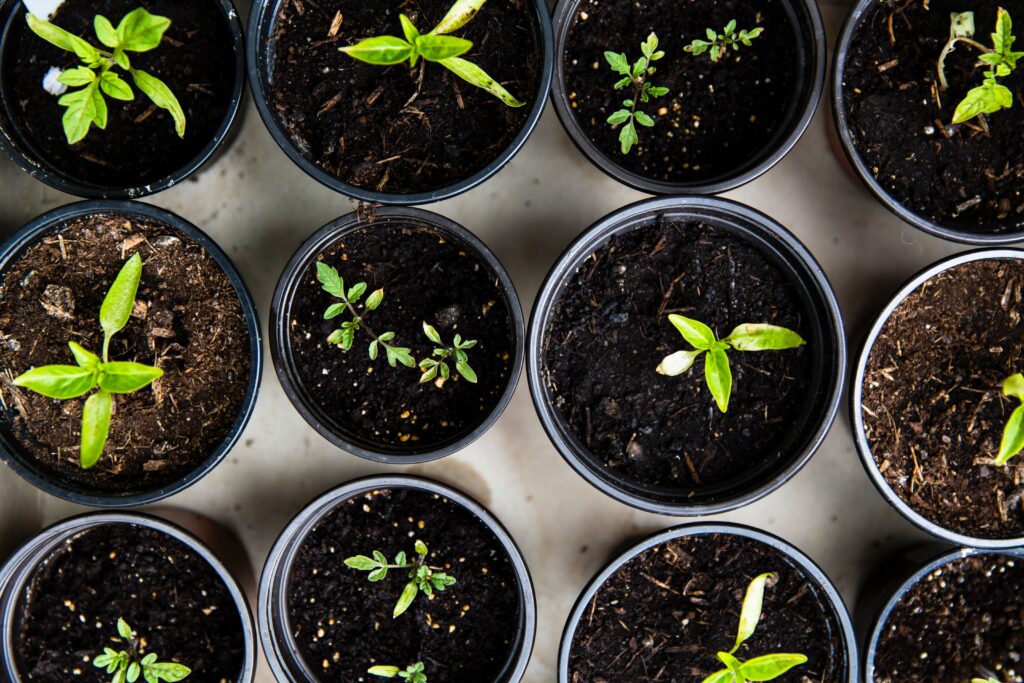
Planting the Seeds for Whatever’s Next.

plants growing

In the past 24 hours, I stumbled upon two very similar quotes from two very different people.

The first: I was reading a New York Times essay by Christoph Niemann about a trip to Eastern Europe, and he quoted former Estonian President Lennart Meri, who in 1992, just a year after his country was granted independence from Russia, famously said: “Our situation is shit, but this is the fertilizer for our future.”

The second: J.B. Smoove of “Curb Your Enthusiasm,” went on a podcast recently to talk about his comedy career, and he said, “I like to plant seeds. I’m a seed planter. Whether that tree grows a week, a month, a year, five years, ten years from now, at some point, it’s going to grow. It’s just a matter of how fast it’s gonna grow.”

None of us really knows what things will look like a few weeks or a months down the road. We don’t know if we’re headed for a recession, a depression, a global change in the way we do business — or if this all just a blip.

But what I do know is that this is a moment for us to plant seeds. In the next few weeks, I’m going to launch a few small projects — some on my own, some with partners in the news space — to try to be helpful. I’m not focused on driving revenue with these projects. The goal is just to help, in the way I can be helpful, at a time of need.

Long term, my hope is that the help I give and the relationships I build now will lead to interesting things down the road — whenever and whatever that might be.

As the former President of Estonia and a guy on HBO both wisely noted: Now’s the moment to plant the seeds for whatever’s next.

———

That photo of plants growing comes via Unsplash and photographer Markus Spiske.

Be Prepared.

When I interviewed a candidate at BuzzFeed for a role on the newsletter team, I always asked the same first question: Do you subscribe to any of our newsletters?

These were candidates who’d applied specifically for a job on the newsletter team. They’d submitted resumes and cover letters for the role. We’d read through them, picked the candidates we’d liked, and set up a quick phone screener — 20 minutes on the phone to ask a few questions. Each candidate had a few days to prepare for that interview.

And yet: Probably forty percent of the candidates I interviewed immediately said “no” to my simple question: Do you subscribe to any of our newsletters?

I was always astonished by that. How could so many people know absolutely nothing about the types of work we’d done? Signing up for a newsletter was remarkably easy, and free. And yet two out of every five candidates failed to do even that.

In all the interviews I did, I can’t recall a single candidate who answered “no” and got a second interview.

I tell that story now because I’m reading “In the Land of Men,” a memoir by Adrienne Miller about her time working at GQ and Esquire. In it, she tells the story of her first day of work, walking through the office with GQ editor David Granger:

“As Granger and I spoke, it became apparent that I did have one thing going for me: I was able to talk about past issues of GQ. Later, he said that I got the job because I was the one person he’d interviewed who’d actually even bothered to open the magazine.”

“ ‘Never underestimate how unprepared most people are,’ he would later observe, correctly.”

The bar to clear in a first interview is pretty low: Show up on time, have a few questions ready to ask, and make sure you’re knowledgeable about the place you’re interviewing at. That minimum effort won’t get you the job — but it might be enough to get you to the second round of interviews.

Just Listen.

A friend is starting a brand new job on Monday, after more than a decade in his previous role. We were chatting the other day, and I was asking him: What’s it going to be like starting a new job like this? How are you going to approach it?

His reply was incredibly smart:

I’ve got a lot of big ideas for the job, he told me. But my job isn’t to tear everything down and start fresh. I want to figure out how to take what they’re already doing and make it better. So the first couple of weeks, my job is simple: I need to ask a lot of questions, listen to the team around me, and then try to figure out how to get others to buy into the vision that I have for the job.

I love everything about that reply:

1.) He’s putting listening first.

2.) He’s trying to build a team with a shared vision.

3.) He’s thinking about incremental changes as a way to build respect and drive the organization in the right direction.

Big changes don’t happen overnight — direction is more important than speed. But if you listen, if you get others to buy in, and if you work to make positive changes — even small ones — you can make a difference in the long run.

That illustration is by Katerina Limpitsouni for unDraw.

One Lesson From Remote Work: You Have To Find Time To Pause.

I’m just a few months into working remotely as I grow Inbox Collective. There’s a lot I like about it. For one: I’m writing this from Utah, where I’ve been working for the past 10 days. It’s been fun getting to work in a new place (and then getting the chance to ski when I can).

But something I’ve learned about remote work: Your office is wherever you are. If you’re on a plane and there’s decent WiFi, that can be your office. If you’re on a chairlift checking your email, that’s your office. If it’s midnight, and you’re at home, on the couch, laptop open, well, that’s your office.

When you’re remote, it’s easy for the work to follow you around all day. I wake up, walk over to my desk, and often start my day by 7 a.m. But if I’m not careful, it can be 10 p.m., and I’m still there, working hard. And I’ve learned quickly that that’s not a recipe for success. If I try to work long hours every day, including weekends, I’l burn out.

So I’m trying a few things this year that are a little different to make sure I keep that balance between work and play. Here’s one: I’m pushing myself to make 90 minutes every day, in the middle of the day, for a pause. I can go to the gym, take a walk, step out for lunch, or get coffee with a friend — but I have step away from the desk for a little bit.

Here’s another: I’m going to set a time to shut down work at the end of the day. (It’ll be around 7:30-8 p.m.) I’m thinking of this as the “pencils down!” request your teacher probably gave you in high school at the end of a test. There’s always going to be more work, and I can’t just work all day. I’ve got a lot on my plate — consulting work through Inbox Collective, work on Not a Newsletter, and speaking gigs. I know I have to find time to pause.

We’ll see how this goes in 2020. I’m hoping that creating this time for breaks gives me the time to focus on the other things happening in my life — and hopefully, gives me the energy to come back and tackle bigger work projects in the long run, too.

———

That illustration is by Katerina Limpitsouni for unDraw.

Here, Read This: “Draw the Owl.”

I love this post from Daniel Zarick, a former product manager at Twilio, about the strategy at his old company. The focus was always on starting quickly and figuring things out as you go. Or as they put it: “Draw the owl.”

Start figuring it out. Put some of the pieces together. When you truly get stuck, ask for pointed advice. Stuff like “What sort of salary should I be asking for at my experience for this type of job?” and “Do you think X marketing strategy is good for this type of product?”

Nobody else can lay out all the steps for you, because nobody else has been you or is in your situation.

You’ve just got to draw the owl.

Read the whole post here.

Less is Enough.

You’ve heard the expression, “Less is more.” I don’t believe that to be true.

I think less is enough.

I believe that, yes, you should sketch out those big plans. You should think about the best-case scenario. You should lay out the roadmap — the work you want to do in six months, in twelve months, and beyond.

But you should also be willing to start soon. Remember: Direction is more important than speed. The goals you want to achieve are ambitious, and they’re going to take time. You’re not going to be able to move as fast as you want to go.

But you can start. It won’t be everything you want, but take the first step anyway. Start moving in the right direction.

Less isn’t everything you want — but it’s enough to start.

———

That photo by Jamie Templeton was published on Unsplash.